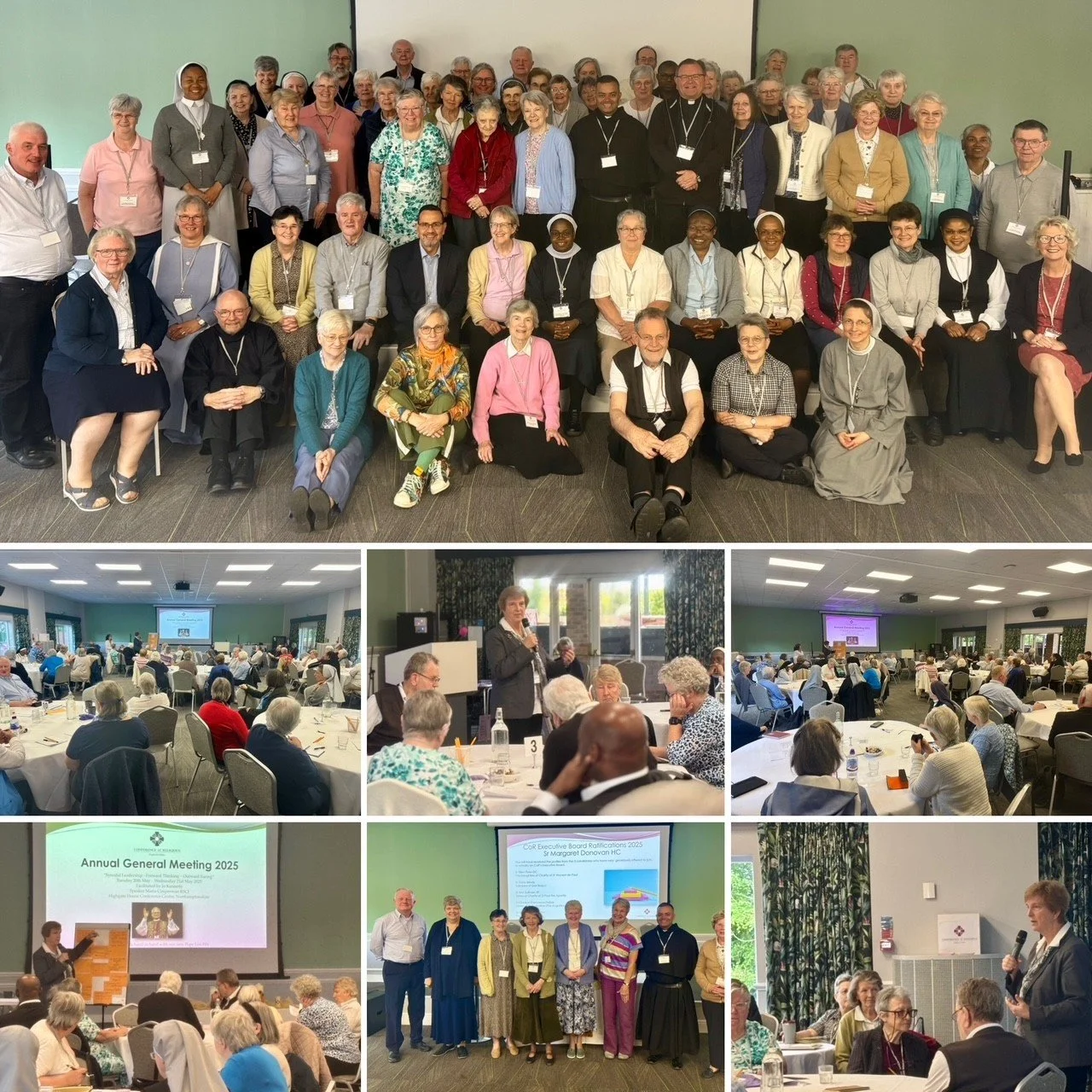
CoR AGM 2025 “Synodal Leadership - Forward Thinking – Outward Facing”
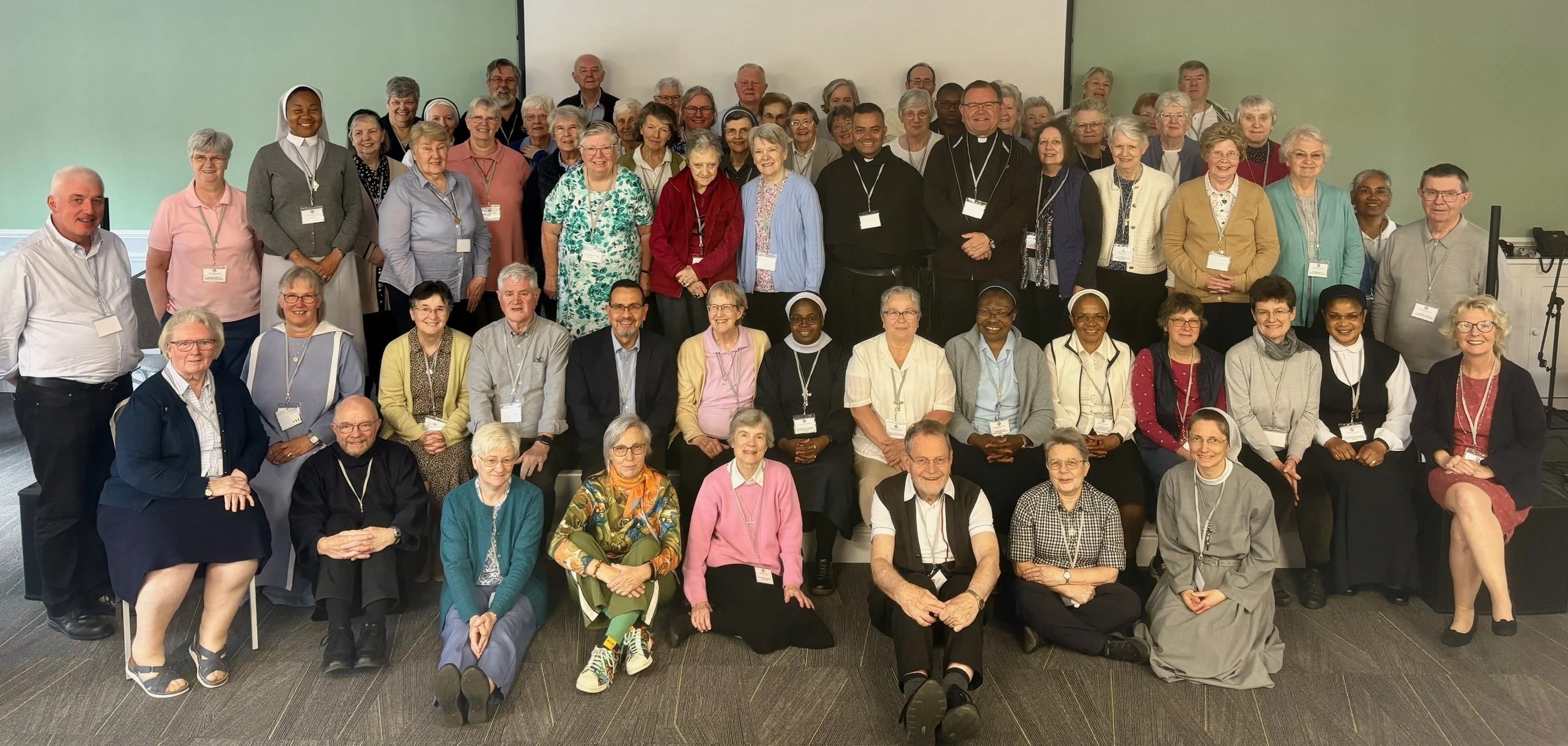
Conference of Religious England and Wales (CoR)
Annual General Meeting (AGM) for Leaders 2025
“Synodal Leadership - Forward Thinking – Outward Facing” Facilitated by Jo Kennedy
Guest Speaker Sr Maria Cimperman RSCJ
Date: Tuesday 20th May – Wednesday 21st May 2025
Location: Highgate House Conference Centre, Northamptonshire
Day 1: Tuesday 20th May 2025
Opening Prayer and Welcome
Led by Sr Sarah Dobson CJ, Sr Monica Mathews SHCJ and Sr Anne Morris DHS. Members were warmly welcomed, with special recognition given to Fr Colin Hope CSWG, the Anglican representative on the CoR Board, Sr Theresa Tighe DC, who attended both as a Provincial and as a representative of CRS and Gerrard Gallagher, Secretary General of AMRI.
Joining Session
Facilitated by Jo Kennedy. Jo introduced the outline of the day, highlighting its focus on exploring synodal leadership, reflecting on current structures, and preparing for leadership elections within CoR. Members then took part in table discussions, sharing: Who am I? Where am I from? How am I arriving today? —an exercise designed to foster connection and presence at the start of the gathering.
Keynote Speaker Session: Sr Maria Cimperman RSCJ
Sr Maria Cimperman RSCJ delivered a talk on 'Synodal Leadership in Religious Life' as a way of both being and working, drawing on insights from the global Synod to invite deep listening and meaningful reflection. Her presentation was followed by “Conversations in the Spirit” at table groups, guided by reflective questions and captured through attendees’ responses. A period of quiet reflection was then offered, during which Members could submit anonymous questions or wonderings.
Feedback Response and Further Reflection
In the afternoon, Sr Maria Cimperman RSCJ responded to the themes and reflections shared during the morning session. She thoughtfully guided the conversation from synodal leadership within individual congregations to its broader significance for leadership within CoR. Members reflected on how the principles of synodality relate to their personal and collective leadership responsibilities.
Key feedback and insights included a growing awareness that religious life is entering a new phase, one marked by deep listening, openness to the Spirit, and a readiness to challenge societal and ecclesial structures where necessary. Members emphasised the importance of embracing vulnerability, fostering mutual respect, and honouring intercultural and intergenerational diversity. They expressed a desire to empower others by drawing out their gifts and encouraging participation, particularly from quieter voices.
The group recognised the need for courageous and compassionate change, rooted in trust, hope, and collective discernment. Synodality was affirmed as both a spiritual journey and a structural transformation—calling for silence, attentiveness, and shared responsibility.
Members also highlighted the potential for religious communities to be models of synodal practice, inspiring and enabling the wider Church to walk the same path.
Introduction to CoR Leadership
Led by Sr Sarah Dobson CJ, Sr Monica Matthews SHCJ, and Sr Anne Morris DHS, the current leadership team proposed continuing with the shared leadership model first adopted in 2024. This structure was introduced after repeated efforts to identify individuals willing to take on the traditional roles of President or Vice President yielded no candidates. Each leader brings distinct strengths and responsibilities:
Sr Sarah Dobson CJ provides strategic and governance advice, oversees relationships with external partner organisations, and manages key internal roles including the General Secretary and Safeguarding Lead. Additional responsibilities include setting agendas for Executive Board meetings and coordinating AGM planning.
Sr Monica Matthews SHCJ advises the Secretariat, sits on the Finance Committee, and chairs the Health Care Group. Monica also helps to run the healthcare workshops, oversee care forums, and respond to Members’ health and wellbeing related queries, while also contributing to AGM planning.
Sr Anne Morris DHS provides guidance on matters of religious content and significance, acts as the primary contact for the Trustees' report and other regulatory documents, and offers clarity on Membership criteria. She chairs mixed commission meetings, reviews key CoR documents prior to publication, and advises on Church-related issues relevant to CoR’s work, such as the Assisted Dying Bill.
The team emphasised that this collegiate leadershipmodel has proven effective, enabling continuity, stronger communication, and a wider engagement with Members. The shared leadership model was unanimously endorsed by all Members, who affirmed their support for its continuation given its effectiveness and collaborative approach.
Closing Session
In the closing session, Members shared thoughtful reflections and constructive feedback on the day’s programme. There was a strong desire for more time to connect, both in small and large groups, as well as to reflect more deeply on the purpose of CoR and the goals of its leadership. Attendees expressed interest in further input from speaker Sr Maria Cimperman RSCJ, exploring inclusivity within CoR, and continuing the dialogue in a synodal spirit. There was also a call to consider how CoR might act as a prophetic voice in today’s world, particularly on issues such as the treatment of migrants, low-skilled workers, and topics like the assisted dying bill.
Members emphasised the importance of wider engagement across religious communities, suggesting stronger links with national networks like Justice and Peace and increased interaction with the Bishops. Many valued the sense of connection, the friendly and open atmosphere, and the opportunity to meet and share with others. The shared leadership model and the team’s visible commitment were particularly appreciated, as were the well-organised and meaningful Collaboration Workshops on topics like Change Management and Health Care in Local Communities. Suggestions included offering orientation for new Members on safeguarding, sponsorship, and collaborative project work. Overall, the session closed with a strong sense of gratitude for the depth of conversation, the spirit of unity, and the shared journey of religious life in today’s context.
Mass and Celebration Dinner
The day concluded with Mass celebrated by V Rev Fr Richard Reid CSsR. This was followed by a Gala Dinner with open seating, creating a relaxed and welcoming atmosphere for informal connections, shared stories, and continued conversation among Members.
Day 2: Wednesday 21st May 2025
Opening Prayer and Personal Commitment to Synodality
The second day of the AGM began with a prayer led by Sr Maria Cimperman RSCJ, during which she invited Members to make a personal commitment to synodality and reflect on what they needed from the Church. Members responded by posting personal intentions and reflections, which revealed a collective desire for deeper listening, inclusivity, and shared discernment.
Key themes that emerged included:
A call to embrace vulnerability, transparency, and ongoing conversion.
A commitment to deep listening, dialogue, and creating spaces for honest, inclusive conversation—especially with those whose voices are less often heard.
The importance of recognising and strengthening the prophetic role of women and promoting unity in diversity within congregations and communities.
A desire to promote synodality at every level—from parish and deanery to congregation and international structures—through intentional sharing, participation, and leadership formation.
The need for intercultural living, welcoming spaces, and ongoing formation to support synodal ways of being.
Encouragement to be prophetic witnesses, rooted in the Gospel, attentive to the Holy Spirit, and actively engaged in shaping the Church’s future.
These responses reflected a deep engagement with the synodal process and a shared commitment to living it authentically in daily life, community, and ministry.
Annual Report and Financial Accounts Sep 2024
Peter Mackereth, Director at Buzzacott Auditors, joined the meeting via Zoom to present the CoR Annual Report and Financial Accounts for the year ending September 2024. He highlighted the key points of the report and invited questions from attendees. The presentation included an overview of the financial statements and responses to queries raised.
The accounts had been previously reviewed and approved by the Executive on 16 April 2025. Members present were then invited to formally accept the report and accounts by raising their hands. The Annual Report and Financial Accounts were unanimously accepted by the CoR Members in attendance.
Updates from the Secretariat
Susan Thomas, General Secretary, presented an overview of the Secretariat’s work over the past year, highlighting the ongoing efforts to provide effective support to the CoR Membership with a small but dedicated team. Susan introduced the current Secretariat staff Irene Henderson, Administration and Governance Lead and Charlotte Vassallo, Finance and Communications Lead, both of whom work part-time and bring extensive experience from the NHS and religious charity sectors.
The Secretariat has focused on maximising limited resources while maintaining high-quality service delivery. Key savings were achieved through reduced office and travel costs, which allowed more core hours to be dedicated to member support. By using our time wisely and drawing on our individual experience and knowledge, we ensured robust advice and support were delivered to the Executive and members of COR.
The report also emphasised the Secretariat’s commitment to:
Providing timely, professional advice and communication
Supporting governance and financial compliance
Coordinating AGM and Executive Board meetings
Overseeing safeguarding, healthcare, and collaborative committee functions
Current and ongoing projects include website development, the Porticus project, the Online Care Forum, strategic planning, and archive management.
Susan reiterated that the Secretariat operates with the equivalent of 1.5 full-time posts and strives to work collaboratively and efficiently to meet the evolving needs of the Membership. The update concluded with an invitation for questions and reflections from Members.
Safeguarding Update from Sr Dr Una Coogan IBVM Lead Religious for Safeguarding
As Sr Dr Una Coogan was unable to attend in person, a pre-recorded video presentation was shared with Members, providing an overview of current safeguarding developments and structures.
Sr Una outlined the role of the Strategic Council for Catholic Safeguarding (SCCS), which ensures a unified, Church-wide approach to safeguarding across England and Wales. The Council includes representation from religious institutes, dioceses, and safeguarding professionals, with Sr Una serving as Co-Chair alongside Bishop Paul Mason.
The Council’s main purposes include:
Providing one strategic voice on safeguarding issues
Reviewing safeguarding evidence and practice
Offering actionable feedback and guidance
Key safeguarding topics highlighted in the presentation included:
The need for consistent safeguarding training for Religious, especially those coming from overseas
Clarification of safeguarding responsibilities in RLG-owned parishes
Sustainability of the current CSSA membership funding model, including a proposed shift from the current 65% (diocesan)/35% (RLGs) contribution ratio to a 75%/25% split, pending RLG agreement
Strengthening understanding and use of the National Tribunal Service (NTS), particularly around when and how to refer cases involving serious breaches of Church law—for example, misconduct or other offences that could lead to Church disciplinary procedures
Sr Una encouraged members to remain engaged with safeguarding processes and maintain high standards in line with Church and legal expectations. The update reaffirmed safeguarding as a shared responsibility and central to the mission of Religious life in today’s context.
Executive Board Elections and Ratification
The formal process of Executive Board elections and ratification was Led by Sr Margaret Donovan HC. In accordance with CoR’s Statutes, the Executive Board is ordinarily composed of up to 12 Members. However, with five individuals standing for election, acceptance of all candidates would bring the total to 13 Members. Members were therefore asked to indicate, by a show of hands, whether they were content to accept all five candidates, thereby temporarily increasing the Board to 13 Members. The majority agreed to this proposal.
The candidates standing for election were:
1. Sr Ellen Flynn – The Daughters of Charity of St Vincent de Paul
2. Fr Gerry Briody - Salesians of Don Bosco
3. Sr Ann Sullivan - Sisters of Charity of St Paul the Apostle
4. Fr Gladson Francesco Dabre - Order of St. Augustine (The Augustinians)
5. Sr Mary Deane - Presentation Sisters
It was noted that Sr Ann Sullivan SP and Sr Mary Deane PBVM had previously committed at the last AGM to serve for one year and were now standing for re-election.
Voting slips were distributed to all Members present. Once completed, the slips were placed in a ballot box and counted. The vote was overseen and recorded by Sr Margaret Donovan HC, Irene Henderson, and Charlotte Vassallo to ensure transparency and accuracy.
All five candidates were formally endorsed and warmly welcomed to the CoR Executive Board.
Forward Planning for 2026
As part of the strategic planning process, Members spent the afternoon in facilitated group discussions to explore key areas of interest that will inform CoR’s future direction. Five groups based on key areas were formed, with a sixth group led by Sr Maria Cimperman RSCJ focusing specifically on synodality.
Group 1 – Vision:
This group reflected on CoR’s potential as a platform to empower and sustain religious life and mission. Suggestions included greater collaboration in sharing human and material resources to witness to the Gospel and support religious life through collective mission, communication, and presence.
Group 2 – Inclusivity:
Discussions focused on the need for CoR leadership to be more representative and attentive to cultural and generational diversity. Suggestions included financial support for AGM attendance, targeted workshops for religious from abroad, and rethinking how charisms are shared in multicultural settings. CoR to encourage leaders to engage more with new shoots and younger members of their congregations. The group also proposed a youth-focused synodality conference.
Group 3 – Being a Prophetic Voice:
Members discussed the importance of enabling CoR to speak publicly on social and ethical issues. Proposals included forming issue-based committees, offering media training, and disseminating open letters or position statements for use across congregations.
Group 4 – Assisted Dying Bill:
This group focused on CoR’s potential role in responding to the proposed Assisted Dying Bill. Members emphasised the importance of mobilising awareness within congregations and parishes, including speaking at the end of Mass to explain the Bill’s implications. They recommended publicising key media contributions, such as Bishop John Sherrington’s article in Independent Catholic News, and considered the possibility of coordinated action, including a peaceful protest in collaboration with RLSS.
There was also discussion about presenting Parliament with evidence of the potential societal and financial impact should all religious-run care homes be forced to close as a result of the Bill. While acknowledged as a substantial undertaking, Members agreed that evidence-based arguments, particularly those related to financial cost, are often the most effective in influencing policymakers.
Group 5 – Topics for Workshops and Courses:
Recommendations included tailored workshops on safeguarding, charity law, immigration, and leadership support for new leaders. The group also proposed expanding CoR meetings to allow wider participation from congregation Members and enhancing CoR’s role in facilitating mission-focused formation.
Group 6 – Synodality:
Led by Sr Maria Cimperman RSCJ, this group delved further into the principles and practices of synodality, with reflections feeding into both CoR’s internal development and wider Church engagement.
Closing and Farewell
The AGM concluded with words of thanks and farewell. Susan Thomas expressed sincere gratitude to Sr Maria Cimperman RSCJ for her inspiring contributions as speaker, and to Jo Kennedy for her skilled facilitation over the two days. Sr Monica Matthews SHCJ and Sr Sarah Dobson CJ thanked all Members for their active participation and engagement and also expressed appreciation for the valuable contributions and collaborative spirit shown by all Members. They extended special thanks to the Secretariat for their invaluable help in organising and supporting the AGM, ensuring it ran smoothly and successfully.
Documents and slides available to view or download: