
Tributes paid to Bruce Kent
He was a great orator and his words at Pax Christi AGMs, Justice and Peace events, protests at places from Trafalgar Square to Faslane and literally thousands of events over the years will continue to inspire the millions who heard him speak live.

By Ellen Teague:
I wonder how many people hearing Bruce Kent speak about peace activism in a Tablet webinar on 12 May and then seeing him attend the annual Conscientious Objectors service in Tavistock Square on 15 May marvelled at his continuing inspirational commitment to peacemaking in his 93rd year. Of course, he was partly able to manage it with his wife of 34 years - companion peace campaigner, Valerie Flessati - alongside him. But by the end of May Bruce was struck down by illness and died on 8 June. The strongest Catholic voice for peace and nonviolence in the UK was silenced. Or was it?
He was a great orator and his words at Pax Christi AGMs, Justice and Peace events, protests at places from Trafalgar Square to Faslane and literally thousands of events over the years will continue to inspire the millions who heard him speak live. Indeed, many talks and interviews can be accessed on the internet. He reached one million people at just one event - the Hyde Park march and rally in London against the Iraq War on 15 February 2003. "Wave your banners" he said, "what a beautiful sight you are" and engaged the crowd probably better than anyone else that day.
But speaking out was never linked to the size of an event. In early March he felt compelled to join a small CND delegation delivering a letter to the Russian Embassy in London, which said: "For the sake of Ukrainian children taking shelter from Russian missiles; for the sake of all those who will die if the situation escalates and for the sake of the millions of us who will perish if the heightened risk of nuclear war turns into a nuclear conflict, we urge your government to halt the attacks, withdraw the troops and withdraw the nuclear threats."
He lent support to many campaigns. Earlier this year when Campaign against the Arms Trade highlighted the seventh anniversary of the Saudi-led coalition's entry into the war in Yemen, where the Coalition's bombing campaign caused around 9,000 civilian deaths with many more injured, he said, "I am so glad that you have drawn attention to the barbarism of the war in Yemen in which Britain, as an arms supplier, is very responsible." His last blog for the National Justice and Peace Network called for Catholics to support the Peace agenda of Pope Francis - eight years younger than himself. And in it he deplored that at COP26, the recent UN meeting on Climate Change held in Glasgow, the massive contribution to CO2 output by the world's military hardly got a mention despite all the efforts of peace activists outside the official meeting.
The most prominent Catholic peace activist in Britain for more than half a century, Bruce Kent has served in management of the Campaign for Nuclear Disarmament (CND), the International Peace Bureau, the Movement for the Abolition of War, as well as Pax Christi, the Catholic Movement for Peace. He has been vice president of both CND and Pax Christi UK.
But where did his focus on peace come from? Much is told in his autobiography 'Undiscovered Ends' which was produced in 1992 with only two-thirds of his life lived!
His compassion for people facing hardship or trouble, and victims of conflict, goes back to his youth. During schooldays at the Jesuit's Stonyhurst College "where I became an orthodox, right wing young Catholic" he remembers making a fuss about the situation of a cleaner who had a two mile walk to work and he thought transport should be provided. All his life he was quietly attentive to people on the margins. After a period of national service in the British Army, where he served in Northern Ireland, and reading law at Oxford University, he entered a seminary to train as a Catholic priest. The seminary encouraged outreach and he paid weekly visits to a TB sanatorium. He reflected that, "being a Catholic was more than reciting prayers and saying Mass."
In 1969 he was in Biafra during the Nigerian Civil War and saw the victims of the embargo imposed there. He used to point out that one and a half million people starved to death and the blockade was made possible by British weapons. "Biafra taught me the importance of fighting injustice's causes - not just its symptoms" he said, and he has felt the same about the many wars since that time. To ignore the causes of injustice and war "is to short-change the poor of this world". He felt that war and militarism could not be treated as separate issues by any aid agency dealing seriously with poverty.
Bruce was first introduced to the Catholic peace movement in the 1960s. He had met and greatly admired US Archbishop Thomas Roberts SJ at that time, who played a significant role in promoting recognition of conscientious objection to war, using the example of Franz Jägerstätter, an Austrian Catholic who was beheaded in 1943 for his refusal to serve in Hitler's army. People like Jägerstätter, Roberts argued, should know they have the clear support of Church teaching. He also took the view that nuclear weapons involve immoral actions: the destruction of innocent people and a willingness to perform such acts in given circumstances. Bruce had witnessed 'Ban the Bomb' demonstrations in London and developed an affinity with peace campaigners and conscientious objectors. It was a decade that saw him working for Cardinal John Heenan in Archbishop's House, being made a 'monsignor', and clearly being earmarked as a rising star in the Church. He heard remarks about damaging his career if he remained active with CND, but peacemaking had become his primary vocation.
In the 1970s Bruce was juggling chaplaincy work, parish work and peace commitments, including working in the CND office. He was inspired by the great encyclical Peace on Earth in 1963 and in 1971 by the "remarkable" document on the Church and Justice produced by the Bishops' Synod in Rome. Called Our World and You it focused on poverty, peace, education for justice and the Church's duty to practice what it preaches. In 1980 he became the General Secretary of the Campaign for Nuclear Disarmament, at a time when Britain announced it would be hosting American cruise missiles and build new Trident nuclear submarines with American missiles and British warheads. Membership of CND mushroomed throughout the 1980s. Bruce spoke at huge rallies, wrote articles, did interviews, debates, and visited local groups. He often returned on a late-night train from meetings round the country and rose to say early Mass in his parish before heading to the office for another hectic day. There was also a growth in heated attacks on himself and on CND. On 6 August 1986, for example, as he completed a long walk from the nuclear submarine base at Faslane in Scotland to Burghfield, the nuclear bomb factory in Berkshire, the minutes' silence for the dead of Hiroshima and all wars was drowned out by the loud music of opponents.
His greatest sadness was that the Catholic Church "kept the peace movement at arm's length," although a CND survey in the early 1980s found that 25 percent of members were also Christians active in their churches. However, there were exceptions - the late Bishop Victor Guazzelli, former President of Pax Christi, and Bishop Thomas McMahon of Brentwood who broke ranks to call for Britain to take first steps to de-escalate nuclear build up. Bruce praised Cardinal Basil Hume "who gave me generous support" despite mounting personal criticism of Bruce's role in CND by prominent Catholics. These were years when nuclear disarmament was a hot political issue, constantly in the news. For Bruce, things came to a head with the prospect of a 1987 general election promising another bitter contest over the nuclear issue, and further personal attacks on his leadership role in CND.
He felt he was in an impossible position. "Many of my fellow Catholics, and other Christians, told me that what I was doing as a priest gave them hope", he says, "though I knew that most of my bishops did not think my work was priestly". In February 1987 he took the decision to retire from active ministry, saying "I no longer find it possible to cope with the strain resulting from the tension between my pastoral role which means so much to me and what is thought to be an unacceptable political role". In the 30 years since that time Bruce has continued his peace activism. Since 1988, his wife and peace activist Valerie Flessati has been by his side.
Bruce felt an affinity with all peacemakers and all would testify to his generosity and kindness in affirming others. At the 60th anniversary of Christian CND last year, Bruce and Valerie gave highlights of CCND campaigning. One participant said, "I will never forget Bruce turning up at Greenham Common - the site of cruise missiles - to bring chocolates and some warming Scottish 'water of life' during the biblical 40 days of rain after the caravans were evicted in September 1982, and many times after that!" He loved social gatherings and at his birthday parties he would have an array of party games ready for young nieces and nephews and others. My own family received cards from him regularly, whether praising articles or encouraging artistic endeavours. He gave time to sitting for son Luke and the resulting painting is today in the Bradford Peace Museum.
Bruce had endless positive energy, creativity and insight into important issues. The National Justice and Peace Network has called him a "modern prophet" and praised him for understanding "that all justice issues are connected, although his own focus was on ending war and building a culture of peace". He was behind the DVD, Conflict and Climate Change, produced in 2009 which made links between militarism and human-induced global warming. In his speech at Coventry University last November, where he was awarded an Honorary Doctorate, he urged the student audience: "Please think for yourselves. Don't be swept along by whatever happens to be the propaganda of the day. Ask your own critical questions. For example, why are people risking their lives trying to cross the Channel in small boats?" It was interesting when Pax Christi friends had occasional outings to the cinema to view some worthy film, that Bruce would loudly lament the adverts for violent films which preceeded it and which he felt should not masquerade as entertainment. He had an allergy to violence of any kind.
Bruce was an outspoken opponent of the British Government planning to spend more than £200 million on building and maintaining another generation of nuclear weapons to replace Britain's current Trident system. He felt it makes nonsense of any British commitment to rid ourselves and the world of nuclear weapons. "If you have these weapons, you intend to use them" he would say, "and that is immoral". He urged support of the UN Treaty on the Prohibition of Nuclear Weapons.
Bruce educated young people about citizenship and the work of the United Nations. "I go into schools of all sorts" he said, "and ignorance of the good work of United Nations and of its sub agencies, of the International Court of Justice, or the International Criminal Court is massive". It grieved him that, "the miracle which brought the UN to life in on 26 June 1945 remains so small a priority in the Church, and in public life generally".
Bruce admired Pope Francis and supported his work on any action related to peace, justice, equality and the global trusteeship of our world. Bruce felt that peace on Earth is going to depend on joined up education and campaigning on overcoming poverty, militarism and climate chaos, and that Pope Francis understands these connections. "I believe in nonviolent solutions to problems" he said and was delighted that Pope Francis chose to focus on 'nonviolence as a political choice' for his World Peace Day message for 1 January 2017. He was full of admiration for people like Pat Gaffney, former general secretary of Pax Christi, who work quietly and constantly for the common good.
In fact, he was always anxious to recognise women. He applauded his own mother for the strong influence of her Catholic faith in his early years growing up in Hampstead, London, and also being "very generous and outgoing", and Valerie for her peace publications and wisdom on strategising for peacework. Bruce and Valerie knew Franzisza, the widow of Franz Jägerstätter, personally and admired her support of her husband's stance despite being left to raise their three children on her own, harassment from the local community and widowhood of seven decades. He commended Jo Siedlecka of Independent Catholic News for her interest in publishing peace events and stories, and women religious for their loyal support of Pax Christi.
Bruce engaged with groups outside church circles, wherever he found kindred spirits. In 1988 he walked 1000 miles from Warsaw to Brussels (NATO) calling for a united peaceful nuclear-free Europe. In 1999 he was British co-ordinator for the Hague Appeal for Peace, a 10,000-strong international conference in The Hague, which initiated some major campaigns (e.g. against small arms, the use of child soldiers, and to promote peace education). It was this, along with his friend, Professor Joseph Rotblat's Nobel acceptance speech calling for an end to war itself, that inspired Bruce to establish in the UK the Movement for the Abolition of War. In 2019 the International Peace Bureau awarded Bruce the Sean MacBride Prize in recognition of his life's work for peace and disarmament. Bruce also engaged with refugees, visited prisoners and campaigned for prison reform. He was a patron of the Palestine Solidarity Campaign.
Bruce said once: "I have always been a glass half full not half empty person and in terms of peace and social justice the Catholic glass is very much half full". He felt it was amongst groups of visionary people such as Justice and Peace groups and Pax Christi, "that I find my own sources of life and inspiration". He was, "a comfortable member of my own parish but it is with its Justice and Peace Group that I am really at home and of one mind."
I was always surprised that Bruce was sometimes seen as a contentious figure by some Catholics. He spoke such good sense with eloquence and vast background knowledge, always ready to listen to others and to engage with differing opinions. In private, the hospitality of Bruce and Valerie was legendary, surrounded in their flat by books, posters and memorabilia testifying to their faithfulness to their vocation as Catholic peacemakers. They were strongly ecumenical too. Just over a year ago, Bruce and Valerie were jointly awarded the Archbishop of Canterbury's Lambeth Cross for Ecumenism, "for exceptional, tireless and lifelong dedication to the Christian ecumenical search for peace, both individually and together." He was widely admired. At the London service for conscientious objectors in Central London five years ago, there was great excitement that Sir Mark Rylance was speaking, but the award-winning actor himself said his highlight of the day was meeting his "hero", Bruce Kent.
The media was buzzing with tributes as soon as his death was announced. From around the UK and internationally Bruce was described as "a true man of peace", "one of the greatest peace campaigners the world has ever known" and "a great human being and a prophet". I found particularly moving, "our society is weakened by his passing".
Bruce's favourite quote from Catholic Social Teaching was from Pope Paul VI's 1967 encyclical Populorum Progressio: 'Peace is the fruit of anxious daily care to see that each person lives in justice as God intends'. He gave faithful "anxious daily care" to his mission for peace for as long his health permitted and he will long continue to inspire.
Second webinar on dementia : June 9th

Following a very well attended webinar on dementia earlier in the year, organised by the Health & Care group, a second zoom session with expert speakers has been organised for June 9th, 1.30pm to 3pm.
Speakers:
Sharon Johnston:
Specialist Admiral Nurse
Barnet, Enfield and Haringey Mental Health Trust
Sarah Hodges:
Specialist Dementia Occupational Therapist
Barnet, Enfield and Haringey Mental Health Trust
Lis Burgess Jones:
Previously Director of Nursing at Camden & NW London Mental Health Trust
Now Chair of North London Hospice - https://northlondonhospice.org/about-us/meet-the-team/
To get the zoom link, email: communications@corew.org

Together along the digital highway
The conference was organised by a group of Religious who have been meeting monthly on Zoom for the last two years. These meetings have given opportunities to share good practice and resources in our online work, and have also become a source of friendship and support.

By Sr Jessica OSB of Mucknell Abbey
A group of Religious sisters and brothers, all involved in social media in different ways, met together for a day conference in early May, to share insights and discuss in depth how we, as Religious, share ourselves, our lives and our faith online. All together, there were 20 attendees, 12 in person at the Sisters of Mercy Convent in Bermondsey and a further 8 online. There were 13 different congregations and communities represented, both apostolic and monastic, Roman Catholic and Anglican.

The conference was organised by a group of Religious who have been meeting monthly on Zoom for the last two years. These meetings have given opportunities to share good practice and resources in our online work, and have also become a source of friendship and support. They originally started because of a cancelled ‘in person’ conference at the start of the pandemic; meeting together in this hybrid format gave a sense of coming full circle.
In the morning, we had some time for introductions and then Sr. Jessica spoke about her journey with using twitter, both as a primary school teacher and latterly as a Religious. She talked about the reflection she had undertaken on what constituted a monastic and Benedictine use of twitter, and then shared some of the questions she was now asking herself about the ongoing purpose of her use of twitter.
After lunch, we reconvened to hear from Sr. Judith and Sr. Silvana, both of whom reflected on how the particular charism of their communities (Turvey Abbey and Society of the Sacred Heart respectively), informed their writing and sharing online. Sr. Judith spoke about her ongoing use of Facebook, and how she looked for inspiration in the daily liturgy when writing her posts. She shared her aim to encourage love, kindness, prayer and peace in her posts and in her responses, drawing on the Vita et Pax foundation made by Dom. Constantine.
Sr. Silvana then shared her journey with blogging, again reflecting on the way in which her engagement online flows out of her life as a religious sister. She quoted from her first blog post, saying, “This [being a religious sister] is who, what and how I am, and what I want to share with others. So in this blog I hope to bring together my different loves - of words, photography, creativity - and place them at the service of my central love, the Love that will not let me go.”.
The day was full of rich conversation, reflective and at times challenging discussion, and plenty of laughter. At its conclusion, we affirmed the support we continue to provide to one another, and were unanimous in our desire to meet again next year
If anyone is involved in digital communication for their congregation and would be interested in joining the group please email Cathy Edge RSM: cathy.edge@iolmercy.org.uk
Well known retreat giver, Fr Tom Shufflebotham SJ, has died

Fr Tom Shufflebotham SJ passed away on May 4th. He was 87.
Tom was born on 14th July 1934 in Newton-le-Willows in Merseyside and was educated at St Francis Xavier College in Liverpool and then at Mount St Mary’s. He joined the novitiate at Harlaxton in 1952 at the age of 18, and after taking First Vows and making a two-year juniorate in Roehampton, studied for a licentiate in philosophy in Heythrop, Oxfordshire. Between 1958 and 1961 he read for a Master’s degree in modern history at Campion Hall in Oxford, followed by a three-year regency at St George’s College in Salisbury, Rhodesia, teaching history and Latin. A licentiate in theology at Heythrop followed, during which he was ordained in 1967. After a fourth year of theology post-ordination he made his tertianship at St Beuno’s under Paul Kennedy. Between 1969 and 1980 Tom taught history, first at St Ignatius College, Enfield and then, from 1973, at Stonyhurst.
In 1980 he moved to Loyola Hall as a member of the retreat house team and Superior of the community. In 1985 he was appointed as Rector of the Jesuit community in Wimbledon, combining this with the job of vocations’ promoter the following year. After a brief sabbatical, he joined the team at St Beuno’s in 1993, staying there for the next two decades and becoming Superior in 2003. His final move was to St Wilfrid’s Preston in 2014, where he continued to direct the Spiritual Exercises until his final illness.
His Requiem Mass will take place on Wednesday 1st June at 12.15pm at St Wilfrid’s church in Preston.
An invitation from Cardinal Michael Fitzgerald M.Afr
Today, Eastern Christians are a diminishing presence in the Middle East. Maintaining their presence in those lands is essential for stability in the wider region, as well as for guaranteeing Western Christians an unbroken heritage and tradition from the source of our faith.

Dear Brothers and Sisters in Christ,
In my capacity as Patron of the Catholic charity, Fellowship and Aid to the Christians of the East (FACE), I am very happy to commend to you the International Day of Prayer for Eastern Christians, which takes place each year on the Sixth Sunday of Easter (22nd May, 2022).

The Day of Prayer for Eastern Christians was launched by l’Oeuvre d’Orient, a French charitable body which has been actively supporting Eastern Christians for over 160 years. From its inception, in 2016, the Day of Prayer has been supported by the Congregation for Oriental Churches. Over the past three years, thanks to the initiative and organisation of the British charity, Fellowship and Aid to the Christians of the East (FACE), the Day of Prayer has been observed by dioceses across England, Wales and Scotland.
This Day of Prayer brings Eastern and Western Christians together and offers an opportunity to give thanks to God for all that we owe the Oriental Churches: the first preaching of the Gospel, the origins of the monastic tradition, many of the early Church Fathers, and, above all, the witness of the Eastern Christians down the centuries which has been, and still is, an inspiration to our faith.
Today, Eastern Christians are a diminishing presence in the Middle East. Maintaining their presence in those lands is essential for stability in the wider region, as well as for guaranteeing Western Christians an unbroken heritage and tradition from the source of our faith. Our Catholic charity, Fellowship and Aid to the Christians of the East (FACE), devotes itself exclusively to supporting the Eastern Catholic Churches in the Middle East, the Horn of Africa and India, through long-term projects in education, healthcare, pastoral support and interreligious dialogue, so that Eastern Christians may remain in their homelands.
As we come to rejoice with renewed faith in the power of the Risen Lord during this season of Easter, please pray for Eastern Christians, many of whom are suffering from the effects of war and discrimination, especially those in Ukraine who are dispossessed and displaced. May the joy and blessings of Easter fill their hearts – and ours – with hope, so that together we may all come to rejoice with renewed faith in the power of the Risen Lord.
Accordingly, I would plead that this Day of Prayer for Eastern Christians be observed in your parishes on the Sixth Sunday of Easter, and that an opportunity be given to the faithful not only to pray in union with these Christians but also to show their solidarity with them through an optional collection in aid of FACE’s projects under the patronage of the Eastern Catholic Churches.
With the assurance of my prayers and warmest wishes,
Yours in Christ,
Michael Cardinal Fitzgerald M.Afr.
Ears to Listen: Response of Religious to synodal consultation

By Sr Margaret Donovan HC
The three webinars on Communion, Participation and Mission were well attended (between 200-300 each time).
Each started with a time of prayer and a reflection, given by a speaker on the theme. Then there were break out groups to discuss the following:
a) The reflections and thoughts of Religious with respect to their experience of Communion/Participation/Mission in the life of the church in England and Wales.
b) Things Religious identify as the church needing to let go of in England and Wales to allow new or deeper experiences of Communion/Participation/Mission to come.
c) Things Religious identify as the church needing to develop or learn to do in England and Wales, to allow new or deeper experiences of Communion/Participation/Mission to come.
After the session there was an opportunity for Religious to submit further reflections on each of the questions. Overall there was an enormous response, for which we are very grateful. The feedback has been submitted to CICLSAL.
Thank you to everyone who took contributed in any way to the Religious Synodal process. We hope for a positive outcome.
The Road To A Synodal Church: Insights & Experiences, Campion Hall, Oxford 24-26 March 2022
“It was pointed out that we Religious already live a Synodal Church.”

A personal reflection by Fr John McGowan OCD, who attended the Symposium on behalf of the Corew Executive:
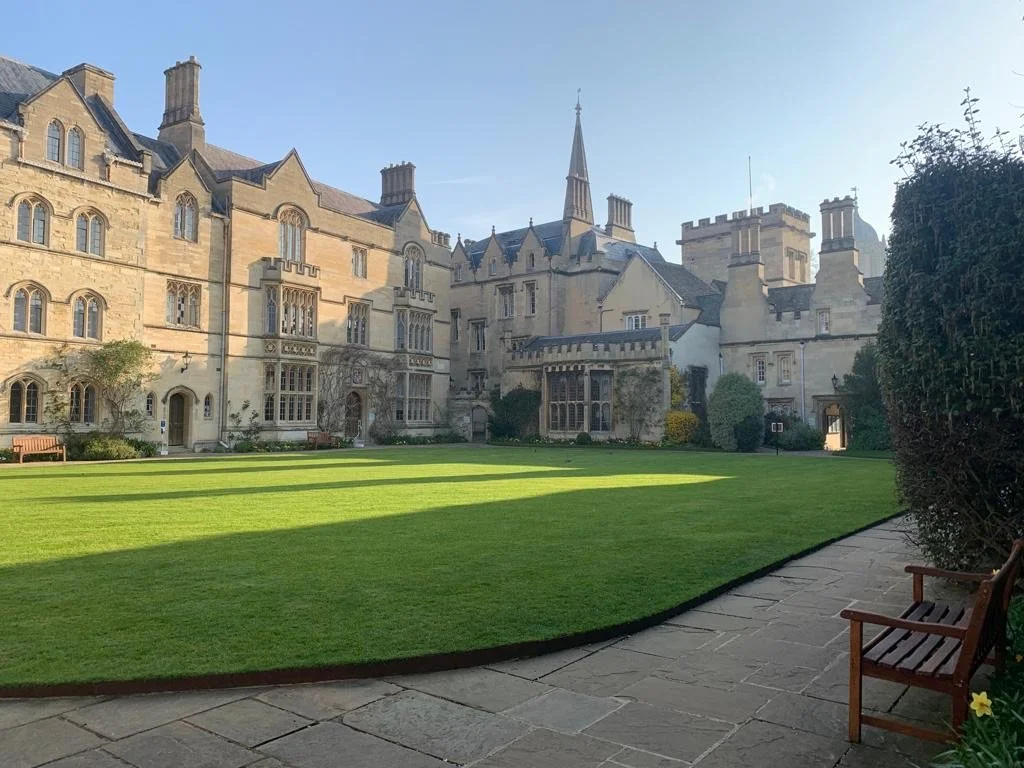
About forty five delegates from all over England and Wales came together for this Symposium. There were also invited speakers including Cardinal Mario Grech, Secretary General of the Synod of Bishops. He is easy to relate to, a humble man, unfussy. Everyone was involved in some way with the process of the Synod on Synodality. The meetings took place in Campion Hall, in the Jesuit Chaplaincy. We were accommodated in Pembroke College.
The Symposium began with a eucharist at 18.00. The chief celebrant: Cardinal Mario Grech. Then a welcome from Fr Nicholas Austin SJ, Master of Campion Hall. This was followed by dinner. At 20.15 there was a synodal Plenary led by Danny Curtin.
Friday 25th March. A busy day; lots to listen to.
8.45 We were welcomed by both Fr Nicholas Austin and Austen Ivereigh. I believe it was Austen who got everyone together. There was ‘disappointment’ that he didn’t manage to get the Pope!
The keynote address:
Card. Grech: “A Synodal Church is a listening Church.”

Cardinal Grech & Dr Austen Ivereigh
He began by asking the question: Is the Synodal Church a listening one? He referred to examples in Sacred Scripture, old and new Testaments, that showed how important listening was. He went on to say that the Church was of its nature, was constitutionally, a listening Church. He referred us to Dei Verbum; how God through the Holy Spirit gives a person a desire to listen. He referred to Lumen Gentium. An important text: 1 John 2: Knowledge comes from anointing by the Holy One. This anointing teaches the anointed about everything. 1 John also refers to the gift of the Holy Spirit. Through the Holy Spirit we are introduced into the very mystery of God.
The Gospels are the Word of Life.
The Church is then born of listening. First listening to Christ, then after Easter to the Holy Spirit.
But why should we listen to one another? Pope Francis has asked us to do this very thing. Cf. Jeremiah.
In the early church, before doctrine came to be written down, there was the certainty that the church cold not err.
John Henry Newman, in The Rambler, took up this theme of listening to the People of God; to all the baptized. In the second millennium this synodal practise has been waning. Yet, Pope Pius IX was synodal: to people’s surprise. The Immaculate Conception, 1850, was established due to the ‘sensus fidelium’. The Doctrine of the Assumption, 1950, the same.
Vatican II recovered this sense of a synodal Church that was already there in the early church.
Cf. Lumen Gentium. Notice how the chapter on the People of God (2) came before the chapter one hierarchy (3). Lumen Gentium no longer understands the Church in terms of differences (priests, laity) but in terms of the equality of all the baptised.
Centuries before, following the Council of Trent, the ministerial priesthood was considered superior to the common priesthood of the people; different in essence and degree. We now understand that the common priesthood of all the baptised in interrelated: common and ministerial.
Listening works in this context: this relationship between the lay and ministerial priesthood. We have seen division. There are two forms of participation in the one priesthood of Christ, which are mutually ordered to one another. They compliment each other. The emphasis must be on service not on power. All the baptised are called to share in the priestly, prophetic and kingly role of Christ.
The Church must uphold the deposit of faith; everyone must do this: bishops as well as the faithful. The Church-Teaching and the Church-Taught are one, and not to be divided. The bishop is the principle of unity.
The principle of listening does not exempt anyone from participation; from Bishops to the least of the faithful, saints as well as sinners. All have a right to speak, but also a duty to listen. When there is prophesy there must be discernment.
To answer the question he posed at the beginning: the synodal church is a listening church. Because a listening church is a synodal church. At the beginning St John Chrysostom said: “The Church and Synod are synonymous.”
There followed a period of questions and answers. Here are Card. Grech’s replies:
We all need synodal conversion. We need to help one another
This synod is putting Vat II into the present
The synod is not purely introspective but it is also missionary and evangelical
The importance in this process of listening to what is not being said.
We all need to undergo training in listening. To hear the fears and interpret the silence of those who don’t speak up.
Pope Francis is constantly trying to translate Vatican II into the life of the Church.
Session I : Synodality In the Religious Tradition
Fr. Nicholas Austin SJ: ‘Not Knowing What We Will Find’: the Art of Discernment.
Pope Francis’s pastoral approach highlights the importance of mercy. However, for some this is controversial and leads to confusion: canon law is much easier to follow.
We are to be a discerning church. In Acts 15 we read: ‘…the whole church kept silence and listened.’
There is a transition in the Church to listening to the Holy Spirit: stop broadcasting, start listening.
St Ignatius is famous for his discernment. After his injury a new life began to arise in him. God touched him but then he spiralled into desolation. Later he let go and his eyes opened a little.
Detachment: God is at work, in the world, bringing about his kingdom.
Detachment is ultimately for others.
Detachment is about letting go and letting ourselves be led by the Holy Spirit.
Detachment in common: this leads to unanimity.
Cf. Evangeli Gaudium: Inner freedom.
Detachment is not a method, rather it is a prayer.
It transforms, is life changing, and in the end bears fruit.
Detachment is second nature to us all; it’s not just for the Jesuits.
Christopher Jamison OSB
‘All should be called for counsel’: origins and current
Practise of monastic governance.
Monks and nuns already live synodality. Cf. Chapter 3 of Benedict’s Rule: which refers to listening to the community, especially when something concerns the whole community.
We must listen with “the ear of your heart.”
2018 Synod of Youth. Pope Francis highlighted the voice of the Spirit in what others said.
1225 IV Lateran Council decreed that monasteries were to be autonomous with an Abbot President. He made decision but not without consultation and discernment.
The importance of a culture of discernment in monasteries.
When monks began to use facilitators it got us to start talking and helped us to discern. There is a great value in facilitation.
Among the Benedictines there has been two developments:
The practise of discernment by the Abbot
Selection of the Abbot charismatically.
The more voices that are heard the clearer it will be to hear the voice of the Spirit. At first this can be like the tower of Babel but later on it becomes more like Pentecost.
Panel: Sr Jane Livesey CJ (by zoom); Fr John McGowan OCD.

I spoke about our experience as Carmelites, that of St Teresa of Avila, who was by nature synodal. But a more clerical model replaced her, which remained till recent times. Since Vatican II we dialogue and discern more. We don’t use facilitators for our General Chapter: in this regard we are about 30 years behind. However, in spite of this we produced a wonderfully charismatic document which was the fruit of several years consultation.
In order to keep as many as possible on board we should move forward slowly. The Holy Spirit will set the pace. St. Teresa of Avila believed that if God wanted her to do something then not only did she obey but she believed that nothing would stop this. If the Synod is the work of the Spirit, then nothing can stop it.

Session II: Synodality in Continents, Nations & Dioceses
Mr. Mauricio Lopez:
The Latin-American experience: an ongoing journey of synodal conversion. A most impressive man, with huge experience of methodology and working with the Synod on the Amazon.
Pope Francis wanted the periphery to help the centre of the Church with the Synod on the Amazon.
Begin by recognizing our brokenness. Cf. the story of Blind Bartimaeus: his blindness is ours.
We can become blind. But we can want to see again.
When we see the brokenness in others then we see my own blindness.
We need to hear their voices (the broken). Their voices help us to hear our own voice.
We need to name our disease: Jesus asks Bartimaeus to name what he wants: “what do you want?”
Bartimaeus followed Jesus along the way. In the Synod we need to go out, to be missionary. Bartimaeus could have stayed behind, but chose to follow Jesus, to become a disciple, to be missionary.
Fr Philip Inch & Fr Matthew Nunes
Liverpool Synod 2020: Reflections
I must say I thought these two were excellent. The way they shared their experiences of the Synod in their archdiocese over a period of four years. The end result: a pastoral plan. They pointed out that by listening to people it changed the people, but it also changed them.
There is an anxiety about raising peoples’ expectations.
Panel: Fr. Eamon Conway on reform of synod of Bishops; Gerry O’Hanlon SJ on the Irish Synod. Ms. Virginia Bourke on the Australian plenary council.
Eamon began by saying how much he was moved by listening to Frs. Inch and Nunes. He spoke of the experience of being listened to and listening. He pointed out that we have come a long way already, especially when you look back at the way Synods were so controlled. He was an observer at the 2012 Synod in Rome. He was delighted to be invited but found the overall experience of listening without any chance to dialogue or discuss rather difficult. Not even the Bishops engaged in dialogue.
Virginia Bourke spoke from Australia on a pre-recoded video. She said that it was not always good being a woman. She was surprised and disturbed by the reactions to courageous women who spoke about the promotion of women in the Church. There was a lack of openness at the plenary. There wasn’t sufficient time. But there were reasons for hope and encouragement.
Session III: Synod on Synodality 2021-2023
Dr. Austen Ivereigh:
Pope Francis’s dream of a ‘wholly synodal church.’ Austen asked the question why Pope Francis wanted a synodal church; what were the influences behind this decision. The following are some of the reasons:
His concern for unity and reconciliation.
As a Jesuit he was familiar with the Spiritual exercises: the importance of discernment.
He is a man of the people and upholds the theology of the people. “Salvation, he says, will come from the people.”
His time as an Archbishop of Buenos Aires. He asked the question of his people: “What is the Holy Spirit saying to us?” He was impressed by the people’s openness. He felt the Church had left the people, rather than, the people left the Church!
The disjuncture between the synodal experience of the meeting in Aparecida (Colombia) and the other Synods he had attended. In the former there was much more debate and listening.
Fr. Giacomo Costa SJ: Between responsibility and participation: the method of Synod 2021-23
The purpose of the synod: to foster a culture of synodality.
It is not to produce documents, but to ‘plant dreams etc..’ awaken us to a new dawn of hope.
Pope Francis said, “Everyone has a part to play. The Pope, Cardinals, Bishops, Priests are not more important than the others (the laity). No, all of us have a part to play and no one can be considered simply and extra”.
The key to the synod is the ability to listen: not to shut up those we find it hard to listen to.
We discern together (common discernment): cf. Evangeli Gaudium 51. Recognizing, interpreting, choosing: with the eyes of a disciple.
Cf. Laudato si 19: See, judge act.
In spiritual conversation each one was personally invited to :
Recognize their experiences
Interpret those experiences
Act/Choose what to do
At the end of the synodal process it might be useful to spend some time in prayer to re-read the entire synodal process.
Panel: Experience in England and Wales.
Sarah Adams (Clifton): We have to start to imagine who we are as Church.
Dr. Mark Nash (Southwark): Some of the faithful don’t feel part of the Church
Fr Jan Nowotnik: Cf. Pope Paul VI, Ecclesiam Suam. We grow together, we learn together. The importance of dialogue. It is a privilege to listen to what God is saying to the Church.
Sr. Gemma Simmonds: Times have changed for women religious.
We then had a second plenary session facilitated again by Danny Curtin. We broke into small groups to discuss what we had heard.
The Eucharist at 18.00 was presided by Bishop Nicholas Hudson. Fr Nick Austin SJ gave the homily. The eucharist incorporated the Act of Consecration to Russia and Ukraine to the Immaculate Heart of Mary.
Session IV: Synodal Conversion
Fr. Alphonse Borras: The Call to synodal conversion
The concept of Reform (cf. Evangeli Gaudium): leading to conversion.
Apparecida 2007: S. American Conference. It’s importance and influence on participants include Archbishop Bergoglio.
There is pastoral conversion: of the priests and of the Church: the latter being ‘institutional conversion.’ Each one is personally involved.
There are three factors that create resistance:
Fear of change
The mindset: The difficulty of changing a mindset. It is hard for many to embrace the concept of ‘the common priesthood’. There is a fragmented vision of the People of God: a division between clergy and laity. Also the problem of a sacralised concept of the clergy.
Institutional. Particularly financial reasons.
All the faithful have to observe communion: the rights of the faithful, as baptised Christians. The role of canon law is to protect this communion. The importance of taking part in this communion. But this is difficult. Take the eample of a parish council meeting. There needs to be:
Freedom
An agenda
The provision of the necessary information, about the meeting (often a weak point)
It should concern ecclesial life and the mission of the parish; ie., not just about nuts and bolts, the maintenance of the building.
The material that is to be debated. Everyone should be given access to the information.
There should be a facilitator: The parish priest isn’t always good at facilitating.
In the role of the presiding minister, it is important to take advice. This can and should involve the assembly; we can speak of a dynamic debate. This gives space to the Holy Spirit who speaks through the assembly, the Church, the People of God.
There is a distinction between a consultative vote and a deliberative vote. In other words: decision making and decision taking. Cf. Canon Law 127.
It is not good to have a minimalist understanding of the purely consultative vote: (“canon law doesn’t require us to have a parish council”). because all the members are inspired by the Holy Spirit. We have to rediscover the place of the Holy Spirit. Cf. n.b., Lumen Gentium 4 & 13. The role of the priest is to be the shepherd of the faithful and to recognise their services and charisms. So that all may cooperate in this undertaking with one mind.
Collaborative Ministry. This has been spoken about but it needs time for the People of God to digest; maybe several generations.
The Pastoral council should be where all are involved in the life of the community.
Prof Myriam Wijlens (by Zoom)
How canonical institutes can implement synodality: examples of best practice
It is a major challenge for canon lawyers and theologians to adapt to synodality.
Canonical reforms take a long time: decades. However, we don’t have to wait. Canon Law need not stop theological or pastoral development.
1917 code of canon law was in place during Vatican II. But post Vatican II the understanding of Church had changed in spite of the ancient code.
The issue of hermeneutics. Local law v universal law.
Pope Paul VI. Vatican II: take a fresh look at canon law, because of the change in doctrines (Vatican II saw doctrinal change). We all need to move: bishops, priests, theologians, canon lawyers and laity.
The importance of listening and consulting. To find out. To discern before making a decision. A bishop or parish priest does not have a monopoly of knowledge.
The importance of an internal disposition/conversion. Laws and rules and documents are not enough to change people. Vatican II is a reality but some have not internalized it.
There is need for development. Synodality and canon law. The importance of Lumen Gentium. Note the positioning of the chapters, how Chapter two on the People of God, comes before the chapter on the Hierarchy. Pope Francis has internalised this.
There needs to be more dialogue between canon lawyers and theologians. It takes “new-lenses”. Vatican II has called for a transformative process in the church, in local diocese, in religious orders and in congregations.
We learn about doctrine by putting it into practise.
Cf. Evangelii Gaudium 37: Canon lawyers need to be bold and creative.
Panel: Raymond Friel OBE & Gerry O’Hanlon SJ. Synodal conversion in practice.
Raymond summarised what he wanted to say by telling us to read Gaudium et spes.
He spoke of transformation of relationships and transformation of the human heart. These require personal conversation. He spoke about the injustices in society; the Chancellor’s budget was not good for the poor.
Plenary Session (III), led by Danny Curtin.
We broke into small groups again and discussed three areas:
Begin with the insight you have had during these few days.
What next step might the Holy Spirit be inviting you to?
What concrete suggestions do you have to help the Church in England and Wales to move towards a synodal Church.

There was a suggestion that we meet again, or at least, stay in touch online. This final session was followed by a closing mass in the chapel at Campion Hall, presided over by Dom Christopher Jamison OSB. It was testimony to the Cardinal Grech’s humility that he concelebrated without any show of being a Cardinal.
We then had lunch before departing at 14.30. Overall it was a good and worthwhile experience. It will inform and encourage us to go on with the process.
Looking for signs of hope in a troubled world
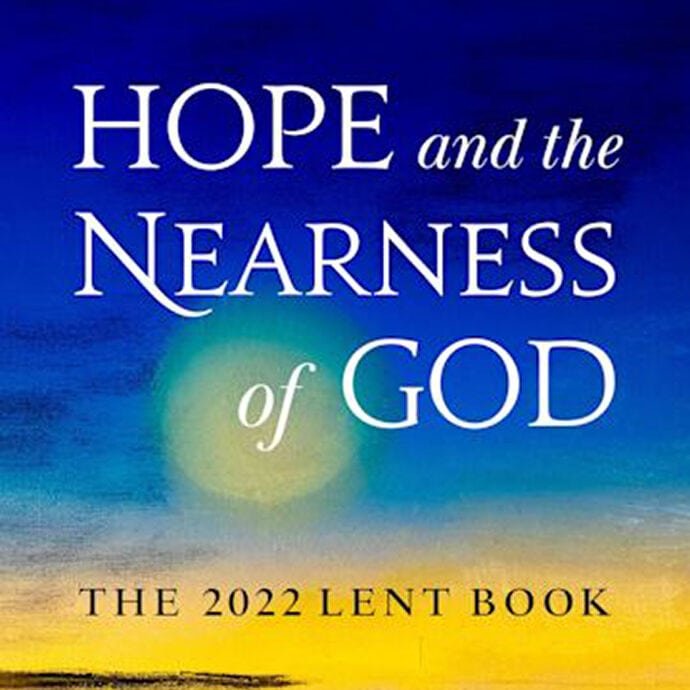
A new book by Sr Teresa White fcj, ‘Hope and the Nearness of God’ has been published by Bloomsbury as their 2022 Lent Book.
Sr Rachel, fcJ writes:
“Hope and the Nearness of God” by Teresa White fcJ is offered as a companion on the journey of Lent in this year of 2022. When Teresa was asked by the publishers if she had any suggestion for marketing her book, the fcJ website came to mind, whereupon they asked if she would find someone to write a book review. I was glad to accept the task, attracted by the title and the anticipation of the inspiration awaiting me.
It feels like a book that could only have been written by someone rich in years, someone who has read widely in literature and life, reflecting prayerfully the while and companioning with many amidst life’s joys and sorrows. I recall the disciple of the kingdom of heaven Jesus speaks of in Matthew 13:52, who brings out of his storeroom things both new and old. And what a storeroom, indeed, is here opened before us, with its feast of stories, poems, reflections and experiences, showing how the energy of hope has blessed, empowered and transformed so many people.
I love that the book has been designed to bring people together in small, informal shared-reading groups. If anything, these have proliferated since the covid pandemic drove us to Zoom, and in my experience have been powerful in deepening bonds of friendship and faith. Each chapter offers some suggestions to help us continue the conversation which each chapter has opened up. The book almost cries out to be used in this way. I look forward to using it with a weekly group, and will not be surprised if we continue to explore its riches through the six weeks of Easter as well as Lent. Even to share the journey of reading the book with just one or two other people would be immensely rewarding.
How appropriate it is to focus on hope at this time when it is so needed! In her Introduction, Teresa shares one of her favourite lines from Blaise Pascal: “In difficult times, carry something beautiful in your heart”. Writing as she did in the shadow of the coronavirus pandemic, it became clear to Teresa that this “something beautiful” could be hope, the hope we saw being longed for in the many rainbows that children coloured and placed in their windows. Yet, one of the strong points of the book is the unflinching and realistic admission that it is not hope but bad news that so often predominates, and with reason enough: “a threatened environment and deeply troubled human communities – a world where an existential anguish seems to float in the air we breathe.” Church and world are in such disarray:
We find ourselves questioning not just the Church but our faith in God …… Against this background, an injection of hope is surely needed.
Teresa White fcJ
The message of the book is that hope is a gift, but not a passive one, as we strive with God’s help to face life’s problems and do what we can to obtain the things we hope for, but in the context of hope, for hope brings transformation. The opening prayer which ends the Introduction gives us the ground plan of the whole book. We pray, “Oh God, remind us of your nearness, teach us to discern signs of hope in the reality of today. Open our eyes to see bridges of hope … open our ears to hear the melody of hope … Open our hearts to the energy of your Spirit, that we may begin each day confident of your care for us and for the whole of creation. Lord, be with us, in your love”.
Throughout the book, the challenge of holding to faith and hope is never downplayed. In the chapter on the providence of God we read: “It is sometimes said that in today’s world God is missing but not missed – and there is some truth in this. In this atmosphere, the gift of hope has an important role to play. Hope does miss God, seek God, long for God. Indeed that is the very essence of hope: to feel the lack, the absence, the distance, and in spite of these things, to place our confidence in God.” Story upon story shows how people like us embody hope, and forgiveness too, in the hardest of situations, demonstrating that love is stronger than evil, which is the heart of the good news of Jesus. The devotion of the Stations of the Cross is sensitively presented, with an extended reflection on the experience of Julian of Norwich, who through her contemplation of the Passion of Jesus came to know that God does not abandon us in suffering but shares it with us in solidarity, though like us Julian constantly questions why suffering should be permitted at all in a universe loved by God. Her 14th century was every bit as challenging as ours, with the Hundred Years’ War still going on and the Black Death sweeping through Norwich three times in her lifetime, and no vaccinations back then!
The chapter on Hope and Courage offers us as companions – among others – Anne Frank, Therese of Lisieux, Rowan Williams, poetry from Charles Peguy, the sad story of one of Teresa’s own young pupils who died tragically, and a moving reflection on the devotion of daily Mass as a desire to feel the touch of God, and of prayer as that which enables us to pass on the touch of God to others.
The chapter on signs and symbols shares surprising signs – surprising given the apparently faithless times in which we live – of a sense of the nearness of God: stories heard, words and actions witnessed, giving expression to hope and courage, and showing the kingdom of God already present in anticipatory and partial ways in our world. For example, the solidarity in caring for others which emerged during the pandemic, or the observed greater readiness to greet strangers and so become living signs of God’s presence. The ancient symbols of the cross and the anchor are featured, and the heaven-pointing spire of the Cathedral of Notre Dame, destroyed by fire yet within days promised to be restored. And the sobering reminder that hope is not the optimism that something will turn out well, but the certainty that something makes sense, regardless of how it turns out.
The chapter on Discerning Hope gives a beautiful account of spiritual discernment – taking on God’s perspective, seeing with God’s heart, and from within God’s heart. As the previous chapter said, most of us will be unable to do this if we are always busy, without some inwardness and stillness. Discernment leads us to see that the darkness of God may not signify absence but unseen and unknowable activity. There are no simple answers to suffering and the radical and disturbing mystery of death. Yet those who have hope can find the spiritual energy to face it without being totally crushed and embittered. Many real-life stories witnessing to this hope are shared.
After signs and symbols of hope we also have bridges to hope, such as music and poetry, walking, prayer, love and laughter. And the final chapter presents the Holy Spirit – God’s Indwelling Nearness – as the source of hope, for it is through the Spirit within us that we feel God’s solidarity when we are groping in the dark. All our “concrete petitions – for good weather, for security and employment, for healing, for basic necessities, for peace and reconciliation, for the homeless and the hungry – are simply our way of expressing our confidence in God’s nearness, and our expectation of his providential care for us.” The Spirit can be the force in the straining muscles of an arm, or the film of sweat between pressed cheeks; it can disturb and challenge as well as comfort; and truly comes to us yet does not linger. The Spirit does not work by stepping in to solve disasters, but by opening our wellsprings of compassion to bring hope in times of devastating suffering.
It is good news that Hope and the Nearness of God will be used in the Pray-As-You-Go app to lead many along our Lenten journey in its ten-minutes-a-day of music, reflection and prayer. This kind of step-by-step presentation seems ideal, for Hope and the Nearness of God is not a book to gallop through. At times, it feels like reading poetry: one must take it slowly and give it time to settle. Teresa says on page 1 that hope is one of those sacred words like gentleness and kindness, love and joy that “seem to draw us into the domain of God. Such words are in the truest sense poetic in that they communicate even before they are fully understood or analysed; indeed they lift human communication to a new level. They are a proof if we need one that though we live in time we are constantly being prompted to contemplate eternal realities.” I have no doubt that this book – born out of faith, hope and love – will give great glory to God by the encouragement it will bring to many, opening our hearts to joyful recognition of the Spirit who is ever with us in the energy of hope.
Walking the streets of Twitter
“If you are not already here, why not join me in the online streets of Twitter and together we can sow seeds of hope. And if you are already here, then please do come and say hello.”

This article first appeared in The Scottish Catholic
Sr Cathy Edge writes: The founder of the Sisters of Mercy, Catherine McAuley, said, ‘The streets will be our cloister’. When founded in 1831, Catherine was adamant she did not want to establish another order of nuns who were hidden behind high convent walls. Instead she wanted the sisters to be able to go out into the streets of Dublin, and wherever foundations called them, to serve where the people needed them. Because they went out to people in need, the early Sisters of Mercy became known as the ‘Walking Nuns’.
Twitter or social media in general is the modern equivalent of the streets of Catherine’s Dublin. Those streets the sisters walked were not always nice places to be, being places of poverty, deprivation and disease. But the sisters stepped out. Many see social media as an unfriendly or unsafe place to be and while this can be true, that is why I am here. Just like any street, it can also be a wonderful, friendly and inspirational place to be. And again, that is why I am here. Do I get it right all the time? No, far from it. But, like the other #NunsofTwitter and #BruvsofTwitter, I try.
In The Guardian 11 Feb 2021, Sirin Kale wrote,
“I am increasingly coming to the conclusion that social media is a very bad
place, a sick place, and it would be better for all of us if we just switched it off.
… And then I take a turn on the promenade of religious Twitter, and I think:
maybe things will work out after all. Until the great unplugging, you’ll find me
on religious Twitter. Pull up a pew – it’s safe here.”
Social media reflects our world, with all facets of society. I have ‘met’ some wonderful people here. Strangers become friends, even though we have never met in person. Over time I have met some on video calls, and one of the greatest joys is when that in-person meeting happens.
I can see people inviting others to join them in prayer or for reflection and retreat opportunities on Twitter. I also see people requesting or offering prayers and support. For some, social media is where they experience Church.
Catherine McAuley was a prolific letter writer. She used this powerful tool to communicate with her sisters in other convents, and motivate others to support the sisters’ ministry. Would Catherine be on Twitter if she were alive today? I do not doubt that the answer would be ‘yes’. She would have loved the instant aspect of social media and how she could use it to reach out, interact and touch people across the world.
In 1837, Catherine ended a letter to Sr Teresa White, ‘Write me a few lines as soon as you can’. To Anna Maria Hartnett in 1837, ‘Write to me soon a poetical letter no matter how long – the more nonsense the better’. I can use social media to foster relationships that can support encourage, inspire, console and offer frivolity, helping to make it a safe and pleasant place to be.
Hospitality was central to Catherine’s spirituality of God’s Mercy, as seen in Jesus’ life and ministry. She encouraged the sisters to see God in everyone they met and welcome all. Pelagius (354-418), a British monk of Celtic origin, said a Christian is someone ‘whose door is closed to no one’.
I love the Island of Iona. A ‘thin place’, where the distinction between heaven and this world is less, and it is easy to encounter the sacred. ‘The Iona Abbey Worship Book’ includes the following ancient Rune of Hospitality that sums up Catherine’s theology of hospitality beautifully:
We saw a stranger yesterday,
We put food in the eating place,
Drink in the drinking place,
Music in the listening place,
And with the sacred name of the Triune God,
he blessed us and our house,
our cattle and our dear ones.
As the lark says in her song,
Often, often, often goes Christ in the stranger’s guise.
And Mary Sullivan RSM, a biographer of Catherine, tells us:
“If we wish to sow the seeds of real hope in our world, I think Catherine
McAuley would say: This is the way we would do it – one person at a time:
one answering of the figurative doorbell, one opening of the figurative door,
one embrace of the stranger, one welcoming of the other, one sharing of our
bread and milk – one person at a time.”
(Mary C. Sullivan, Welcoming the Stranger: The Kenosis of Catherine McAuley)
My prayer is that we see the hidden presence of Christ in everyone we meet on Twitter. And sow seeds of hope by answering the figurative door one tweet at a time.
On 24th February this year Sr Catherine Wybourne OSB, @Digitalnun passed away. She has been on Twitter since 2009 and was an inspiration to me and many others by her sharing and humour. She will be greatly missed.
If you are not already here, why not join me in the online streets of Twitter and together we can sow seeds of hope. And if you are already here, then please do come and say hello.
Sr Cathy Is a Sister of Mercy, originally from Irvine in Galloway Diocese who now lives in Salford Diocese. She is a funeral arranger who in her spare time has special interests in digital media, baking and knitting. You can find her on twitter @KnittingNun
Sr Ann Teresa, Founder of Medaille Trust, has died
The Sisters of Saint Joseph of Annecy (SSJA) have announced :
It is with deep sadness that we announce the death of our Founder and Life President, Sister Ann Teresa, on Monday 7 March 2022, at Llantarnam Abbey.

Sr Ann Teresa was a Sister for 57 years, serving mainly in Newport, where she grew up, and Southampton. She spent many years teaching RE at St Joseph's High School, Newport. In 1997, she settled into a small convent in Southampton and she asked her local Parish Priest what she could do to help the community. Within days she found herself directed towards work with women engaged in street prostitution in the city. For many years, four or five nights a week, she walked the streets offering comfort and practical assistance to this very vulnerable and marginalised group.
Sister Ann Teresa said: "These people had no one to help them, so twice a week we cooked them a big meal. The convent became a second home for some. We celebrated Christmas and birthdays with them, took them to the theatre; anything that gave them a bit of happiness". After hearing stories of human trafficking and investigating prostitution further, Sister Ann Teresa gathered about 50 people together and launched Medaille Trust in 2006. She set up a safe house for victims of Modern Slavery in Southern England and travelled the country soliciting donations from businesses and church congregations. She eventually got support from Comic Relief, and Medaille Trust established five more safe houses.
Today Medaille Trust is one of the UK's largest providers of supported accommodation for victims of modern slavery, with nine safe houses. We have provided shelter and support to more than two thousand people fleeing abuse and exploitation. Our Moving On Project works with survivors of modern slavery, helping them access counselling and support, access education and employment, and integrate into the community. We partner with the police to bring the perpetrators of modern slavery to justice.
Medaille Trust CEO Garry Smith today paid tribute to Sister Ann Teresa, saying: "I remember when I first met Sister Ann Teresa at the convent in Southampton, long before I became CEO of Medaille Trust. She was bright-eyed, engaging and interested in my thoughts but what came across most powerfully was her love for the survivors of modern slavery because she had taken the time to get to know them personally, to understand their stories and to walk alongside them on their journeys.
She was a powerful advocate for survivors and her influence in the anti-trafficking sector, both within the Catholic Church and beyond, was incredible. She has left an amazing legacy through her founding of Medaille Trust, which she named after the founder of her order, and we are privileged to take this forward. On behalf of the Trustees and Management and Staff of Medaille Trust I extend condolences to the family and friends of Sister Ann Teresa. May she be granted eternal rest and may perpetual light shine on her."
Prayer for the suffering people of Ukraine
We pray for the world
that in this moment of crisis,
we may reach out in solidarity
to our brothers and sisters in need.

Loving God,
We pray for the people of Ukraine,
for all those suffering or afraid,
that you will be close to them and protect them.
We pray for world leaders,
for compassion, strength and wisdom to guide their choices.
We pray for the world
that in this moment of crisis,
we may reach out in solidarity
to our brothers and sisters in need.
May we walk in your ways
so that peace and justice
become a reality for the people of Ukraine
and for all the world.
Amen CAFOD
Heavenly Father, Your will for your people is peace, not war. Pour out on our world, especially in Eastern Europe, your Spirit of compassion and solidarity. Grant all those who believe in you the strength to be close to those who suffer and the courage to resolve their differences and conflicts in truth and without resort to arms. Be with the widow, the orphan, the refugee and the peacemaker. Bind us all into the peace of your Kingdom. Through Christ our Lord. Amen.
Fr Damian Howard SJ, Provincial for the Jesuits in Britain
Tributes paid to @digitalnun, Sr Catherine Wybourne
“Hot tap in the guest bathroom has disintegrated and sent a flood of hot water through the ceiling into the guest quarters below. Perhaps we die as we have lived, distracted by a thousand tiny cares, but hopefully still smiling.” #thoughtsofadyingnun

Courtesy of ICN:
'Benedictine nun keen on God, books and technology. Likes people, too. I blog at: http://ibenedictines.org ' - so wrote Benedictine Sister Catherine Wybourne, who died on 24 February, at the age of 68.
Sister Catherine, prioress of Howton Grove Priory, Herefordshire, was loved by tens of thousands of followers on Twitter as 'Digitalnun' with her insightful, often funny reflections on current events, prayer and the monastic life.
Born in Chatham , in April 1954, Driana Enid Wybourne was educated at Boscombe Convent and Girton College, from which she graduated in 1976 with an MA in History. She later carried out research in Spanish mediaeval history and went on to spend three years in banking before entering Stanbrook Abbey in 1981. She became a well known commentator in British media, writing on many faith issues, and contributed a weekly column to The Universe.
Sr Catherine had been suffering with cancer for some time. When she was told the doctors could not do much more for her, she left this message:
"The God in whom I believe is much bigger, and so much more fun, than we often allow him to be. I thank him for letting me be a Benedictine, which has been the supreme joy of my life, for the friendships he has inspired and the graces he has poured out on me despite my stubbornness and lack of co-operation. I ought to thank him for the difficulties, too, but I don't 'do' piety. Brutal honesty is more my line. I know he understands.
..I'm sorry for the times I have hurt or offended people. I think I can honestly claim never to have done so intentionally and hope you will forgive me. Forgiveness and reconciliation achieve much more than division, condemnation or insults, and what our world needs now is surely a more lively sense of our common humanity and a readiness to change.
..My delight in poetry, music and the natural world is undiminished. My mind may be slower than it once was but I still enjoy engaging with ideas and arguments. I love the daily monastic round which is the weft and warp of my life. Our garden continues to be a source of joy and I remain quite soppy about dogs, P.B.G.V.s and Bassets Fauve de Bretagne. No surprises there! When I spoke to my sister on the 'phone to give her my news, she gladdened my heart by laughing through her tears, so I hope my ability to see the funny side of life will continue. And if you don't like my humour, tough. If I feel well enough, I may be online occasionally but there are many practical problems absorbing the community's time and energy just now. So I suppose I'd better start tidying that sock drawer. Or maybe I'll just go and talk to the dog.
Thank you for reading this. May God bless you all.. "
A few of her recent messages on Twitter:
22 Feb:
Hot tap in the guest bathroom has disintegrated and sent a flood of hot water through the ceiling into the guest quarters below. Perhaps we die as we have lived, distracted by a thousand tiny cares, but hopefully still smiling. #thoughtsofadyingnun
23 Feb:
Praying for all tweeps on the feast of #StPolycarp (a favourite of mine as you will see from iBenedictines): for steadfastness, courage in adversity, and growing old(er) with wisdom and compassion. #Prayer
24 Feb:
(The day Russia invaded Ukraine, the day of her death):
Praying for all tweeps. There are no words for the anguish of Ukraine's invasion and the consequences for all of us. May the Lord have mercy on us all. #Prayer
Benedictine abbeys: keeping ancient crafting traditions alive

Aspects of Benedictine monastic life have recently featured on BBC television as part of a series.
'Heaven Made' shines a light on communities of monks and nuns in the UK and Ireland, who share the imaginative craftmanship and skill used to create beautiful handmade products.
The programme starts with Galway's stunning Kylemore Abbey, a former Victorian castle and estate, now home to fourteen nuns. Their innovative Christmas hampers were to have a new addition, boxes of hand made chocolates.
The series also features St Augustine's Abbey, Chilworth, in Surrey and Quarr Abbey near Ryde on the Isle of Wight. Film crews spent around 4 weeks filming at Quarr, focusing on all different aspects of life there and the products they make on site.
Each Abbey nurtures important links with the local rural community who embrace their creative crafts and sustainable methods. On The Isle of Wight, tenant farmer Matt Legg works alongside agile former farmer, 76 year-old Fr Gregory and supplies free range meat for the cafe.
The series is available to watch:
https://www.bbc.co.uk/programmes/m00129kt
Sr Gemma Simmonds talks to BBC radio about the Pope's video
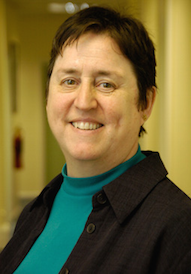
In his February 2022 prayer video, Pope Francis told nuns they should fight when they’re unfairly treated - at times “by the men of the Church.” Pope Francis said nuns sometimes serve so much they are reduced to servitude.
Dr Gemma Simmonds CJ, Director of the Religious Life Institute at the Margaret Beaufort Institute of Theology, spoke to Ed Sourton on the BBC R4 Sunday programme. He began by asking if the Pope’s comments reflected her view?
This is the link to the programme; the interview starts around 6 minutes in from the beginning:
https://www.bbc.co.uk/sounds/play/m0014638
"The Church cannot be understood without them."
“Do not be discouraged. May you keep making God's goodness known through the apostolic works you do. But above all through your witness of consecration.”

Source: Vatican News
Pope Francis dedicates his February 2022 prayer video to religious sisters and consecrated women. He says: "The Church cannot be understood without them."
Encouraging all consecrated women to discern how best they can respond to the challenges facing humanity, he says:
"I exhort them to keep working and to have an impact with the poor, with the marginalized, with all those who are enslaved by traffickers," he said. "I especially ask them to make an impact on this."
Pope Francis also prayed for the many women religious who "show the beauty of God's love and compassion" through their ministry as catechists, theologians, and spiritual guides, even when they encounter obstacles.
"I invite them to fight when, in some cases, they are treated unfairly, even within the Church, when they serve so much that they are reduced to servitude - at times, by men of the Church."
When faced with these difficulties, women religious should "not be discouraged," said the Pope. "May you keep making God's goodness known through the apostolic works you do. But above all through your witness of consecration."
The full text follows:
“This month, we will pray in a special way for religious sisters and consecrated women.
What would the Church be without religious sisters and consecrated laywomen? The Church cannot be understood without them.
I encourage all consecrated women to discern and choose what is best for their mission in the face of the world's challenges that we're experiencing.
I exhort them to keep working and to have an impact with the poor, with the marginalized, with all those who are enslaved by traffickers; I especially ask them to make an impact on this.
And let us pray that they may show the beauty of God's love and compassion as catechists, theologians, and spiritual guides.
I invite them to fight when, in some cases, they are treated unfairly, even within the Church; when they serve so much that they are reduced to servitude - at times, by men of the Church.
Do not be discouraged. May you keep making God's goodness known through the apostolic works you do. But above all through your witness of consecration.
Let us pray for religious sisters and consecrated women, thanking them for their mission and their courage; may they continue to find new responses to the challenges of our times.
Thank you for what you are, for what you do, and for how you do it.”
(The video is available to view on the homepage of www.corew.org)
New General Secretary takes up office
“2022 will see the creation of a new strategy - striving to raise the voices, ideas, issues and best practice of the Religious of England and Wales.”

Nicholas Witherick, a former Estates Manager at the Victoria and Albert Museum in London, has been appointed as the General Secretary of the Conference of Religious of England and Wales. The second successive lay appointment to the role, he replaces Valerie Nazareth, who was in post for three years. Commenting upon his appointment, Nicholas Witherick said:
“I’m aware that those who met Valerie Nazareth know how effective she and her team have been in enhancing the role and identity of the Conference throughout the Religious Community in England and Wales. She has left the organisation in a very strong position, and I intend to build on that with the direction of the Executive and our Members. 2022 will see the creation of a new strategy -striving to raise the voices, ideas, issues and best practice of the Religious of England and Wales.”
Marking her departure, Valerie Nazareth, a lawyer and former Head of Editorial Legal Services at the BBC commented:
“It has become a commonplace for people leaving a job to say that it has been a privilege to work in that role. But in this case it really is true. Working with Religious over the past three years has been a brilliant experience. Their lives are devoted to the service of others, often in defence of the weakest and most vulnerable in our society. There is much they can teach others, not least about spirituality and living for others. Their skills in listening and discernment seem to me to be second to none. The ongoing work of CoR, its members, staff and executive will all be in my prayers.”
In late October, at the end of the AGM for congregational Leaders, tributes were paid to the outgoing General Secretary. The President of the Conference of Religious, Fr Paul Smyth CMF, thanked her for all the expertise and hard work that has guided the organisation through a challenging period.

Nicholas Witherick & Valerie Nazareth
A life less ordinary: Sr Pamela Hussey
“It was a critical and intense period in the Cold War. Dictatorships and oligarchies, backed by the CIA, ruled many of the Latin American States with appalling human rights violations as a consequence……Pamela had the advantage of looking frail and conservative when she wasn’t. She was the scourge of US Foreign Service personnel who were entirely unprepared for the passion and anger of this diminutive and well-spoken woman when they tried to defend the indefensible. To her great pleasure her work was first recognised in 2000. She was awarded an MBE for her tireless defence of human rights.”

By Professor Ian Linden
All my children and many others loved Sister Pamela Hussey. Pamela would have been 100 on 7 January 2022. She died peacefully on 13 December in Cornelia House, in the Harrogate care home of the Society of the Holy Child Jesus. She made up for missing the traditional letter from the Queen by receiving one from each of two Popes, Benedict XVI and Francis, congratulating her on her Diamond Jubilee as a nun. An Anglo-Argentinian, Pamela grew up in Buenos Aires which makes the occasion being noticed for a second time, and by Pope Francis, seem more fitting.
Pamela wanted to join the war effort and sailed in 1942 from Argentina on one of the perilous Atlantic crossings to the Bay of Biscay and, hugging the French coast, northwards to wartime Britain. She joined the Women’s Royal Naval Services (WRNS). For three years she worked in Scarborough as a wireless telegraphist in an offshoot of GCHQ Bletchley – where she is on the Roll of honour - and returned in 2014 to open a new centre through the good offices of Prince Charles. In 2018 she was awarded the Légion d’Honneur for her service during the Second World War presented in person at her care home by a representative of the French Government. As a special operator she learnt Morse Code spending hours on end waiting for German U-boats to break cover and surface to communicate with their base revealing their location. It was hardly the most effective use of a woman who was a fluent Spanish speaker, who would take a degree in modern languages at St. Anne’s Oxford and, having joined the SHCJs in 1950, teach languages for ten years.
The first time I met Pamela was in 1981 when she became a volunteer administrative assistant in the Latin America department of the Catholic Institute for International Relations (CIIR) where I had also just started working. It was a critical and intense period in the Cold War. Dictatorships and oligarchies, backed by the CIA, ruled many of the Latin American States with appalling human rights violations as a consequence. Pamela gravitated to the El Salvador desk at CIIR, making several field trips, sharing the department’s admiration for the Archbishop of San Salvador, St. Oscar Romero, his courage, work for justice and his theology and after his assassination publicising his life. Pamela had the advantage of looking frail and conservative when she wasn’t. She was the scourge of US Foreign Service personnel who were entirely unprepared for the passion and anger of this diminutive and well-spoken woman when they tried to defend the indefensible. To her great pleasure her work was first recognised in 2000. She was awarded an MBE for her tireless defence of human rights.
The last time we met I asked Pamela what training as a Woman Religious was like in the strict self-effacing convent discipline of the 1950s for someone like her. “Well”, she said, “I complained to the novice mistress that my personality was being crushed. She replied: ‘Pamela, your personality is oozing out of every pore’”. And anyone who knew Pamela would agree. In a quiet sort of a way Pamela had style. Decidedly not the dressy kind but more her old fashioned politeness which set her at ease with a huge spectrum of people whom she would address as ‘dearest’. One of my happiest memories of Pamela was her 70th birthday party in 1992. We had a lovely meal in the upper room of the now defunct Gay Hussar. Jon Snow and George Foulkes MP, later Baron Foulkes of Cumnock, were there. She was in her element. So was everyone else though sadly the number of empty bottles arrayed on the table in front of the group meant a photographic record of the event for the CIIR Annual Review had to be censored. Even at Apley Grange she would take a daily walk to the local hotel for morning coffee with her copy of Le Monde or La Croix to keep up with international and Church affairs. The last time I saw her she confided that she had Alzheimer’s then promptly recited a long poem word perfect from memory.
Pamela was a feminist. Books she wrote, Freedom From Fear: Women in El Salvador’s Church and, with Marigold Best, Life Out of Death, the Feminine Spirit in El Salvador and Women Making a Difference bear witness to that. She felt deeply the betrayal of women who had fought against the Latin American dictatorships and who were expected after victory to return to traditional roles. Her life offered yet another example of the extraordinary range of Women Religious’ gifts to the Church. Her death brings down the curtain on a period when the witness of many Women Religious was within the struggle for liberation against tyranny, justice against repression, life against death. There will never be another Pamela.
She leaves a younger brother, now aged 96.
May She Rest in Peace.
(Ian Linden is Visiting Professor St. Mary's University
www.ianlinden.com)
Climate Crisis – how can Religious respond?
Members of religious congregations from across England & Wales came together for two large information sharing meetings, in the weeks leading up to Cop26, to reflect on ways of responding to the climate emergency.

Members of religious congregations from across England & Wales came together for two large information sharing meetings, in the weeks leading up to Cop26, to reflect on ways of responding to the climate emergency. Speakers included Dr Emma Gardner, Head of Environment at Salford diocese, Edward de Quay of the Laudato Si’ Research Institute at Campion Hall in Oxford, Sr Margaret Atkins OSA of Boarbank Hall in Cumbria and Brother Loarne Ferguson OFM Cap.
The first meeting attempted to set out the big picture of how the Church in England & Wales is responding, such as: diocesan environmental projects / the network of environmental leads which has been developed to foster collaborative work across the dioceses / the question of investment & divestment / lay led initiatives such as the Ecological Conversion Group and parish/clergy awareness.
The speakers at the second meeting were Religious who have put ecology at the heart of their ministry, including Fr Martin Newell CP and Columban Sr Kate Midgley. The two meetings followed a very well attended webinar in January with Bishop John Arnold, Dr Carmody Grey and Sr Sheila Kinsey who is the Rome based co-ordinator of a global project involving Religious, ‘Sowing Hope for the Planet.’ www.sowinghopefortheplanet.org

The bee shelter design & Bro Loarne
Brother Loarne Ferguson is currently seconded onto an environmental project at a rural location in Worcestershire, a deliberate move by his congregation, to prepare him for further ecological initiatives. Since the summer, he’s been living with an ecumenical community near Broadway, the ‘House of the Open Door,’ specifically to work on a bee project. Through ecological means, he is engaged in designing and building a bee shelter, to consolidate many decades of beekeeping (the community has traditionally had up to 60 hives).

Creating the structure from foraged materials
He commented: “The focus has been on me getting experience and building a structure, at no cost, with local natural resources.” He designed the framework and then commenced a process of foraging for the raw materials. The trunks of dead ash trees were chopped and sanded to make the upright posts of the shelter; gravel discovered in a stream as well as discarded roof tiles were utilised as floor coverings; a large piece of fibreglass was ‘found’ and became the roof. Recalling ‘back-breaking’ digging work through the summer, Brother Loarne was glad of volunteers who gave of their time for free, including a local architect. “This is a completely new way of thinking” he said. “My background is in retreat giving and evangelisation. These recent months have involved focusing entirely on creating a shelter where bees’ needs are catered for. Pollinators are a really important part of the food chain.” He noted that many congregations have installed a bee hive in their grounds. He recommended a ‘Bees’ Needs’ youtube video for those who wish to learn more: https://www.youtube.com/watch?v=7uVeyH7XQXg
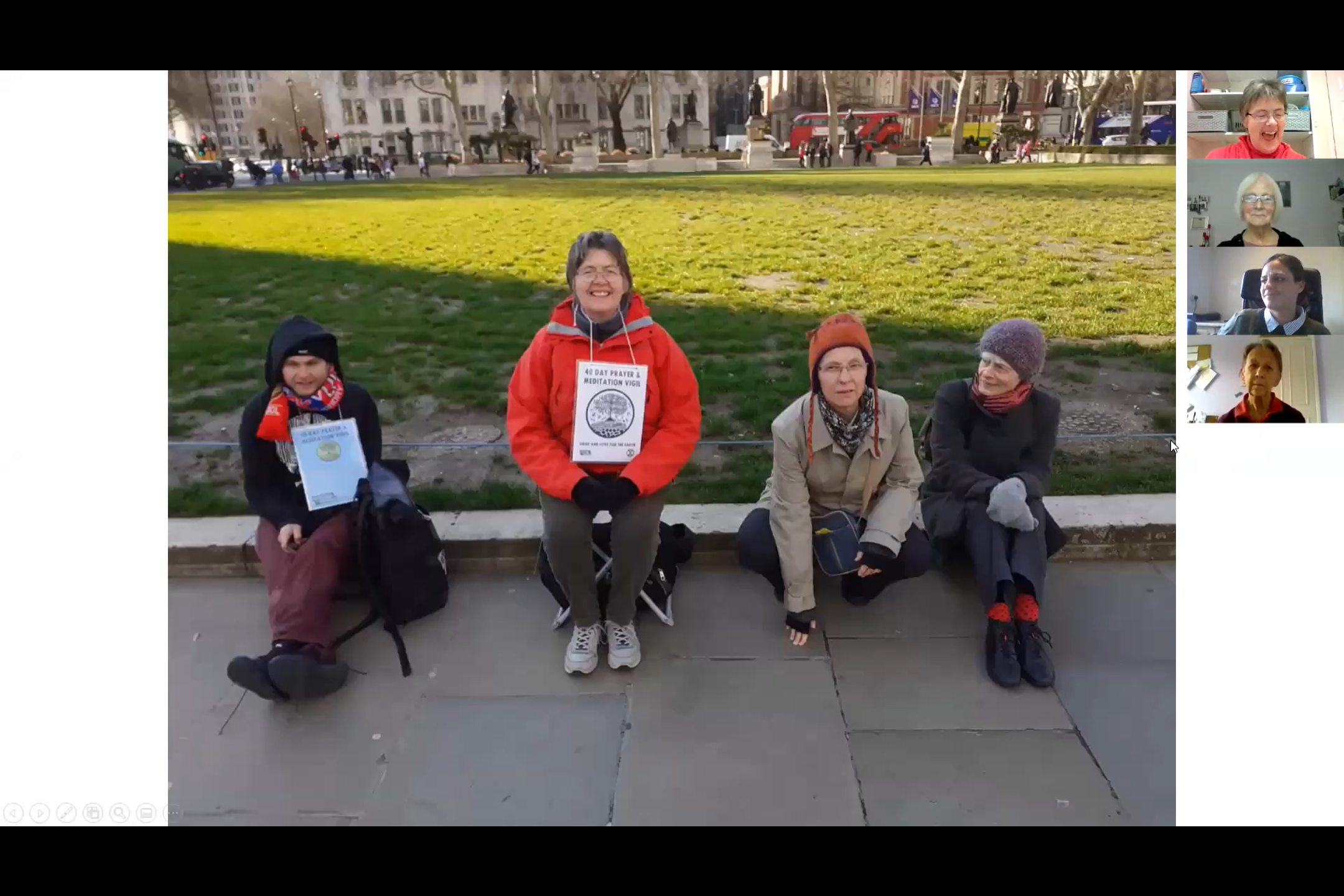
Sr Kate (in red)
Also at the second meeting, Sr Kate Midgley charted her environmentalism, which she dates back to Good Friday a couple of years ago – “a lightbulb moment, my own ecological conversion!” After some personal research, “I came to understand what we are doing to our planet and that as human beings we are destroying it. It is incumbent upon us – in this generation – to do something about it.” By that Easter Sunday Sr Kate had connected with an ‘Extinction Rebellion’ protest and has subsequently developed her involvement since then, predominantly through ‘Christian Climate Action.’ This has involved taking part in awareness raising outside Westminster Cathedral and prayer vigils outside Parliament through Lent. “The climate emergency can leave us feeling overwhelmed – but praying in front of that place, where decisions are made, feels very important.”

Sr Kate & Melanie Nazareth
Ahead of Cop26, Sr Kate joined the first leg of a pilgrimage walk from London to Glasgow - and then caught up with climate activist Melanie Nazareth, to record a video interview as the walkers were journeying through Lancashire. Melanie described the rich experience of discussing the climate emergency with so many people along the way and of how different churches came together along the route to support the walkers, commenting: “Prayer is really important in these situations. Cop26 is not the end. We need to build on this. Cop26 in some ways is the start of a big journey into the future.” More details of the walk at : www.caminotocop.com

Outside Westminster Cathedral
Feeling the need for a specifically Catholic working group, in conjunction with Fr Martin Newell and around twenty others, another layer of activism was formed last year within Christian Climate Action: ‘Catholics for Christian Climate Action.’ The organisers commented at the time: “As members of the Catholic Church, inspired by the Holy Spirit to follow Jesus in reading the Signs of the Times, and in response to the call of Laudato Si’, we focus on engaging the Catholic Church, that is to say, Catholics generally, Bishops and Dioceses, Religious Orders, and other organisations. Our starting point is the climate and ecological emergency and our belief that the UK needs to aim for zero emissions by 2030 at the latest. This is a matter of climate justice, and the good of the poorest and most vulnerable must be a priority in all our efforts..…..The climate emergency requires political action and engagement, including action within Catholic organisations. We hope to energise this collective Catholic political response to the climate and ecological emergency in the public space, as an effective witness to our faith in our Creator God. For more information, email: catholicscca@gmail.com

Facing arrest during a street protest
Fr Martin Newell told the meeting he’d been involved in Christian Climate Action for seven years, warning: “If we don’t act now, it will be much worse in the future. We are already behind the curve.” He explained his rationale for radical activism: “People need to take individual action but the government needs to lead. Just as it acted to put in financial measures during the pandemic, it has to take bold action on the climate emergency. That’s why we are involved in so many protests. We always pray in public too. It’s important that people look back and see that Christians were there. What we do now will have an effect in 10/20 years time. The time lag means it can be hard for people to understand how serious the situation is.”
He reflected on the past year of writing ‘to all bishops’ requesting that dioceses make the climate crisis a priority and for clergy & lay Catholics to be made more aware and for people to be encouraged to engage with their politicians on it. “These requests are also directed at religious congregations,” he added. “We can make changes within our dwellings in terms of living and community life and at the same time press for political changes.”

On the specific question of divestment / investment, James Buchanan of Operation Noah gave a briefing on the work of dioceses and religious orders, a movement that is growing in size continually as more organisations get on board: www.operationnoah.org
Sr Margaret Atkins outlined the broad range of ecological work underway in and around her congregation’s buildings and land in Cumbria (Boarbank Hall) and also how the pandemic has given rise to hundreds of people attending Laudato Si’ retreat/prayer sessions via zoom. An earlier article on Sr Margaret’s work can be read here: https://bit.ly/3iOBJcD
One question put by Cistercian Sisters present at the meeting was how individual congregations and Religious could discern the right course of action in response to the complexity of the climate crisis. Brother Loarne responded by referencing St John Henry Newman’s ‘convergence of probabilities’ - from which arises growing awareness and certitude. Through stillness and prayer, asking for enlightenment and guidance on where to start, opportunities for action will surely arise he said. “Small steps will present themselves.”

'He who has ears to hear:' Religious invited to meetings on Synodality

For a Synodal Church: Communion, Participation, Mission
At October’s AGM for congregational leaders, Sr Margaret Donovan HC led prayer on the concept of listening, as CoR prepares to take part in the synodal journey. In February we will hold our third and final meeting. The previous two sessions have attracted more than two hundred attendees:
Details: 9 February 2022 on the theme of Mission - with a reflection by Sr Lynda Dearlove IOLM, from 4.30 to 6.30pm
To register and obtain the link for each of the meetings please email: admin@corew.org
These meetings will by supplemented by a questionnaire to gather views and to aide the provision of information to CICLSAL in Rome (Congregation for Institutes of Consecrated Life and Societies of Apostolic Life).
In addition, we will be providing the opportunity for Religious to pray together for the success of the Synod over the two year period. We propose to hold liturgies twice a year which we hope will be attended both in person and live streamed to enable maximum participation. We are still looking for people to help us with the preparation of these, so please let the General Secretary know if you are able to help.
We are very grateful to the steering group for helping us with this work. Those involved so far include Sr Margaret Donovan HC, Fr Paul Smyth CMF, Lynda Dearlove IOLM, Ann O’Sullivan RLR, Sr Jane Bertelsen FMDM, Sr Christine McGarry OP, Sr Bridgetta Rooney CSJP and Fr John McGowan OCD.
Congregational Leaders hold their first 'in person' meeting since May 2019
Pope Francis “The journey of synodality is the journey that God wants from his church in the third millennium.”
We propose to hold liturgies twice a year which we hope will be attended both in person and live streamed to enable maximum participation.

Sr Joan Chittister gave a presentation via zoom
The General Secretary of the Conference of Religious writes:

The Papal Nuncio talked about #Synod2023
“It was a great pleasure to be together after so much time apart and so many zoom meetings. I was very pleased with the number of people who joined us. For me, highlights of the two days were the talks given by the Papal Nuncio, Archbishop Claudio Gugerotti and that given by Sr Joan Chittister. Sr Joan’s talk was particularly inspiring and we were joined online by over 360 people, the highest number we have had attend a meeting for several years.
One of the topics we covered was synodality. I am aware that some are not optimistic that the Synod will lead to change and so find it hard to motivate themselves to participate. This point was put to the Nuncio and in response, he reminded us: what alternative do we have, but to try?
Our series of discussions starts on the 24th of November when we will be addressing the theme of communion. All are welcome and more information about this is set out below.
As Pope Francis said on October 17, “The journey of synodality is the journey that God wants from his church in the third millennium,”
SPEAKERS:
We were delighted to have such excellent input over the two days. Slides are available from : admin@corew.org
Care of our Common Home, Sr Nellie McLaughlin RSM:
Coming just days before Cop26, we felt it was fitting to devote some time to the environment, following on from our Cry of the Earth webinar and recent zoom meetings. Sr Nellie, who leads retreats and conferences in eco-spirituality, travelled from Donegal to be with us. Her presentation was informative and wide ranging.

Sr Patricia Mulhall OSB puts a question
Synodality: Archbishop Malcolm McMahon, Sr Rachel Duffy FCJ & Sr Maureen McKnight SND:
The whole of Tuesday morning was given over to this topic. Archbishop Malcolm outlined the synodal process that his archdiocese has gone through, charting its progress from initial planning through to consultations and feedback. The slides are available on request. Sister Rachel and Sister Maureen joined for the second part of the presentation, in which they shared their experience of being part of that synod. Sr Rachel was a member of the Liverpool Synod Working Party.
Papal Nuncio: As mentioned above, we were honoured to be joined by Archbishop Claudio Gugerotti in which he gave an uplifting and inspiring talk about the synodal journey.
Sr Joan Chittister OSB joined us for a live zoom session, to give a talk entitled:
'The Spiritual Mountains of the New Millennium: A Journey to Adulthood’
followed by questions and answers.

Mass with the CoR Executive on the Altar
This very rich and engaging day of presentations was followed by Mass celebrated by the Nuncio. Past and incoming members of the Executive were seated on the Altar and the parish music group provided excellent accompaniment. At the end, Fr Paul called Valerie to the front, to express thanks to her for the three years of service she has given to the Conference of Religious. Recalling that the initial letter from IICSA arrived just a few days after her appointment, he described her as a 'godsend' and thanked her for all the expertise and hard work that has guided the organisation through a challenging period.
The evening concluded with a splendid celebratory dinner. The Religious in attendance and members of the Secretariat were delighted to meet with the Nuncio, who also imparted his apostolic blessing to the staff of the Claretian Oasis.