
Rejoicing in the rich heritage of Religious Orders in education

By Sr Brenda Wallace fcj:

Sr Brenda at the launch of ROE
Religious Orders in Education, (ROE) is a collaborative endeavour launched in 2019 whose main purpose is to enrich Catholic education in England and Wales by supporting Religious Orders in their mission as trustees or founders of schools and colleges. To this end we celebrate and build on the rich heritage of Religious Orders in education and support them in continuing to articulate and develop their particular charisms.
Soon after the foundation of our Association, a working party was established to explore the formation of a Collaborative Trust with the aim of providing a service for those Religious Congregations that wish to transfer their responsibilities of educational trusteeship.
The Collaborative Trust has been given the name Gaudete, a name that proclaims that as a new community of schools we rejoice in the good news of the Gospel, we rejoice in the Holy Spirit who is enabling us to create something new and is teaching us what true collaboration means, and we rejoice in the rich heritage of Religious Orders in education.
The Gaudete Trust will exercise, fully or in part, according to need, those legal, financial, and inspirational responsibilities of educational trusteeship that were formerly carried out by these individual congregations. The Bishops’ Conference formally approved the establishment of the Gaudete Trust as a PJP in Spring 2022 and approved the appointment of the first Foundation charity Trustees at the end of May. Membership is open to any Religious Order but there are five founding congregations:
• Christian Brothers
• The Sisters of Charity of St Paul the Apostle
• De La Mennais Brothers
• The Faithful Companions of Jesus
• La Sainte Union
As members of the Gaudete Trust, these Religious Orders will be able to remain engaged and involved with their schools.
The Gaudete Trust Vision and Guiding Principles for Education are available here.
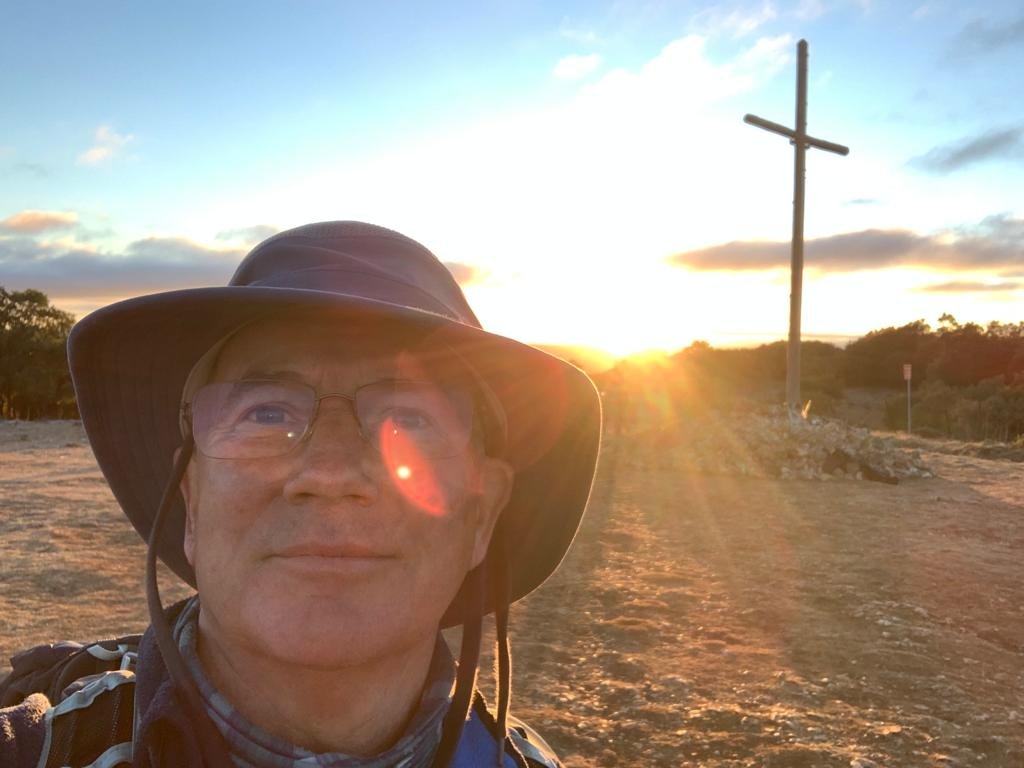
A pilgrim on the way: celebrating forty years of priesthood on the Camino
On the Camino we are all strangers yet no one is a stranger. I think of that adage: ‘a stranger is a friend you haven’t met.’ As we walk, we share. It is quite wonderful and a privilege to listen to so many stories. Many are in transition. Others are looking for something, for themselves, for God.
(source: CoR)
By Fr John McGowan OCD
I write this almost halfway through the 800 kms Camino to Santiago di Compostella.
This walking adventure started when the late Sr Frances (of Nazareth House) asked me to do it with her. She had to pull out but I carried on, at least for ten days….. that was four years ago. Now I am on sabbatical, celebrating forty years of priesthood, and decided to do the whole Camino.

Fr John taking a break
I would say it is one of the greatest graces of my life. Here you see humanity at its best, as it should be. The pilgrims look out for each other and care for each other. As I write, just now a South African nurse bandaged the foot of a fellow pilgrim; he was Korean and suffering from blisters. We are like the United Nations. It is wonderful to see all these people come together and get to know each other. On the Camino we are all strangers yet no one is a stranger. I think of that adage: ‘a stranger is a friend you haven’t met.’
We walk along, about 20-25 kms a day and as we walk we share. It is quite wonderful and a privilege to listen to so many stories. Many are in transition. Others are looking for something, for themselves, for God. There are people of all ages, young and old; we all mix as if we were the same age.It is not comfortable and many are suffering from blisters, tendinitis or some other ache.

One of the things I had to quickly get used to was sleeping in the same room, often a dormitory, with other people. Like most of us Religious I have my own room and bed. But this common sharing as we journey along is what bonds us together. Snoring is a problem; women are sometimes worse than men!
It is a privilege to pass through towns and villages that have been here for a thousand years and more. I notice how the Church is always the centre of a town or village, it is often the biggest building. Today, in our materialistic society, it is the banks that are central and the biggest buildings.To walk is the best way to discover a place and there is so much to discover of history, culture, art and above all the people. They greet us as we pass with “Buen Camino”.

One of the things the Camino teaches you is how simple life can be. As we walk along the only thing we own is the rucksack on our back. We are grateful for a bed at night and for the food we eat. It only costs €10 sometimes to stay a night. Tonight I’m staying in an old Poor Clare convent. The other night I slept in an old Benedictine monastery. As I go along I pray the rosary first thing in the morning. I leave at 6.30. It’s dark and you are alone. If I get the chance I will stop in a church and say morning prayer. One of the disappointments is that many of the churches are closed. Throughout the day you have time to yourself and time to be with others. Then at the end of the day we meet up to eat together. Before that I attend a special pilgrims Mass which is provided in every place we stay in.
As I write, it is the feast of St Therese of Lisieux. I pray for you as I slowly make my way to the tomb of the great Apostle James. Please keep me in your prayers.

The Season of Creation and the making of a crucifix in the spirit of Laudato Si’
The Season of Creation refreshes our faith in God’s care for nature and points the way for us to act rightly within it.

Br Brother Loarne Ferguson OFM Cap

Bro Loarne
Thanks be to God for the liturgy! How could we ever keep in mind everything the Lord has given us if it were not broken up into our cycle of prayer? Every year is shaped by the events of the Lord’s life, the invisible realities of heaven, and the many needs He has sent us out to serve in the world around us. The Season of Creation refreshes our faith in God’s care for nature and points the way for us to act rightly within it.
But will it work? Will we change any of our ways because of this time? Do we need a more permanent expression of God’s care for nature before His ways become ours? We have become so used to thinking about God in a restricted way that unless the link between Christ’s death and the natural world is spelt out, maybe we will keep ignoring it.
It was thoughts such as these which inspired the Laudato Si’ crucifix. Not that making it was very intentional - it almost created itself. The garden shed at Durham Friary was where it began. We were clearing out garden debris when Br. Paul found three battered and broken crucifixes. “Shall I throw them away?” asked Br. Paul. “No,” I said. “I’ll take them home and see if I can use them.”
One was particularly sad. Under a layer of mould, the wood had been stained black, and the whitened body of Christ was hanging on by one arm (one of the doloristic-style crucifixes of years gone by.) It stood out as the only black and white one of the three: stark and final. But under that surface layer, the wood had lost nothing of its qualities. After carefully prizing out the nails and removing the corpus, a patient hour of sanding began to reveal the tree.
...And then another hour, and another hour. The black stain ran quite deep and never completely disappeared. Somehow, I felt that Jesus would speak only if I could see the pure, clean wood. And that is when it began to turn into a Laudato Si’ crucifix. In Jesus’ death I had to let nature speak. Carving out the shape of the Saviour’s body three millimetres deep revealed it.
Now, Jacob’s ladder came to mind and with it, Jesus’ words: “Truly, truly I say to you, you will see the heavens opened and the angels of God ascending and descending on the Son of Man.” (John 1:51.) Or was it really Jacob’s ladder I imagined? Was it not perhaps a garden trellis? And were those angels birds? The creative process can be beset with uncertainty and metaphors are not always helpful; but I was sure I had seen that trellis ladder before.
Yes. It was a William Morris design. I printed it out and traced it over the wood. Using a pyrography machine (a sort of fine-tipped soldering iron) I burnt the trellis into the cross. Next, watercolours flowed among the leaves and flowers, and still allowed the wood to shine through. Jesus’ body began to bear fruit in a renewed creation. Varnish. More varnish. And yet more. This wood had been thirsty for a long time.
Finally, it was complete. The Laudato Si’ crucifix grew out of a reclaimed crucifix and a few meditations on Laudato Si’. Its purpose is to help our journey of ecological conversion become a daily one.
The crucifix and other ecologically inspired art is available for purchase on enquiry at:
The House of the Open Door Community, Childswickham, Worcs. WR12 7HH.
Tel.: 01386 852 084. E-mail: hod@houseoftheopendoor.org.
Spiritual maturity is the key theme of forthcoming General Meeting
“The soul’s song continues to reverberate and gain momentum as we move through the stages of life. Ultimately, we take hold of the opportunities and challenges that each stage of life has to offer.”

Sr Una Agnew SSL will be the guest speaker at CoR’s General Meeting, open to all Religious, taking place in person for the first time since 2019.
It will be held on October 26th at the Claretian Oasis, Botwell Lane, Hayes UB3 2AB (easily accessible by overland train from Paddington. Parking also available).
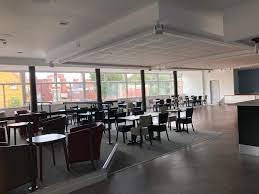
Claretian Oasis, Hayes
Sr Una has chosen the title: ‘The Spiritual Challenges of the second half of life: The complex Task of Growing up!’ and comments:
‘The spiritual well-being of the second half of life (from 40 onwards), is a potential that needs to be explored even as it is happening within us and among us. While mid-life is a pivotal milestone in our development, later life makes us more keenly aware of the transition from active living to active being. In all cases we cross the threshold into deeper soul time with an opportunity to reset our lifegoals. There is a popular saying that states: ‘Growing old is mandatory, growing up is optional.’ To grow up, new levels of consciousness are required and a new depth of spirituality for older and younger alike. The soul’s song continues to reverberate and gain momentum as we move through the stages of life. Ultimately, we take hold of the opportunities and challenges that each stage of life has to offer.
This day of reflection and sharing is an opportunity to explore together, in a morning and afternoon session the rich seasons of grace that we call growing in wisdom age and grace. “
Sr Una Agnew is a St Louis Sister and taught for many years at the Milltown Institute, Dublin, Ireland. She studied spirituality at Duquesne University, Pittsburgh, USA and completed her PhD in literature at University College Dublin. Sr Una is a founder member of the All Ireland Spiritual Guidance Association and is actively involved in Spiritual Directors in Europe. She has written and lectured widely on spiritual topics.
NB! Registration/ hot breakfast from 9am for 10.00 am start.
Lunch provided. 4pm finish with coffee/bar available until 7pm
For further details email: communications@corew.org
New Abbot at Douai

Douai Abbey, Berkshire
The monks of Douai Abbey in Berkshire have celebrated the blessing of Father Paul Gunter OSB as their new abbot.

@douaiabbey
Abbot Paul received the abbatial blessing from Bishop Egan of Portsmouth, accompanied by 12 bishops and archbishops, together with the Abbot President of the English Benedictine Congregation and 13 abbots, on Thursday September 8. The Deputy Lord Lieutenant of the Royal County of Berkshire attended and ecumenical guests included the Anglican Bishop of Reading.
In his homily, Bishop Marcus Stock of Leeds highlighted the Rule of Saint Benedict as the immediate "spiritual foundation" for guiding the brethren; the ring as a sign of constancy in loving kindness; and the pastoral staff for the sacrificial love required of any shepherd of a Christian flock. In a similar vein, the new abbot has taken as his motto convertat ut benignitas, 'may he convert by kindness'.
In his words at the end of Mass, Abbot Paul spoke of the rich array of saints named in the Litany sung before the blessing. They were, he said "outward-facing ministers of the Gospel, of every time and state of life." Included in the Litany were the martyrs of China and Ukraine. They give us courage "to be missionary; that is, effective witnesses in our time to the person and saving work of Jesus Christ."
Abbot Paul Gunter, 56, is a native of Wolverhampton and entered Douai Abbey in 1985. After serving for some years on some of the monastery's parishes he was sent to Rome in 2002 for higher studies in liturgy at the Pontifical Liturgical Institute (PIL), where he was awarded a doctorate in 2006. He served ten years on the faculty of the PIL before returning to become parish priest of Alcester in Warwickshire.
In 2012 he was appointed Secretary to the Department of Christian Life and Worship of the English and Welsh bishops' conference, in which role he continues to serve. He was elected the eleventh abbot of Douai on 11 May 2022, succeeding Abbot Geoffrey Scott who retired after 24 years as abbot.
Douai Abbey, whose patron is Saint Edmund, King and Martyr, was founded in Paris in 1615. Dispersed by the French Revolution the community of English Benedictines was re-housed in Douai, northern France in 1818 before returning to England in 1903, settling at Woolhampton in Berkshire. Douai School, which also moved from Douai to Woolhampton, closed in 1999. The constant work of the monks of the community has been service on the mission in England and Wales, though its monks have served as far afield as Mauritius and Australia. Today the community has 21 monks, some of whom serve in parishes in the dioceses of Portsmouth, Birmingham, Liverpool, and Menevia.
Poor Servants reflect on 150 years of ministry
Earlier this year, the Poor Servants of the Mother of God celebrated the 150th anniversary of its founding. It was with gratitude we marvelled at what has been achieved by our Sisters and our collaborators.

The new General Team…. (l to r):
Sisters Mumbi Mutwii, Mary Whelan, Margaret Cashman ( Leader) Mary Holmes, Munanie Syengo
By Sister Rosarii O’Connor:
The 22nd Chapter of the Poor Servants of the Mother of God has just taken place at the Kairos Centre, Roehampton, the headquarters of the Congregation. Earlier this year, the Poor Servants of the Mother of God celebrated the 150th anniversary of its founding. It was with gratitude we marvelled at what has been achieved by our Sisters and our collaborators.
The Theme of the Chapter was Strengthened and United, we go forward to love, serve and witness.
Delegates from six countries, Kenya, Tanzania, England, Ireland, Italy, and USA represented their communities. The three-week event included a three-day retreat, and a discerning process led by Fr Michael Holman SJ.
The process and conversations were centered around the Synodal Pathway. Our facilitator was Sr Brid Long SSL. As this Chapter ends the responsibility of each SMG Sister is to respond to call of the Chapter and discern how to live out the Mandates individually and collectively.
Religious at the Lambeth 2022 Conference
We had worthwhile contacts with bishops who had never encountered a Religious Community before. We also had important conversations with some of the conference stewards, young adults from around the world, many of whom were on a vocational journey, and in some cases had not previously had an opportunity to consider Religious Life.

By Sr Sue Berry CSF:
I was privileged to be present when more than 650 bishops, and around 500 spouses from across the 165 countries of the world-wide Anglican communion met at the University of Kent in Canterbury from 26th July to 8th August 2022 for the fifteenth Lambeth Conference. In addition to oblates and tertiaries of different Orders among the bishops and spouses, and among the staff and volunteers of the various support teams, there were also Religious participating in a variety of ways. My colleague Christopher John, Minister General SSF, led an international Pastoral Team, composed of Anglican Religious of different Orders, fluent in a range of languages, who were available to bishops, spouses, and everyone present. My main role, with the Secretary of ARCiE (Anglican Religious Communities in England), and a few other Religious, was to staff a stall providing information about Religious Life throughout the Anglican Communion, and a contact point for those wanting to explore further.
Some bishops wanted advice and information about starting a community in their diocese, or about their role with an existing community. Others particularly sought guidance over the role of a Bishop Visitor. A fringe meeting held one evening towards the end of the conference for bishops interested in exploring these issues further was led by Bishop Philip North CMP, chair of the Church of England’s Bishops’ Advisory Council on Religious Communities, with over 40 bishops from around the world attending. Several Religious spoke briefly about their experience of Religious Life, there were questions, small group discussions, and the meeting welcomed news from Christopher John about the formation of an Anglican Religious Life Network, as one of the official Networks of the world-wide Anglican Communion. The ARLYB (Anglican Religious Life Yearbook) website https://arlyb.org.uk giving details of all the Anglican Communities world-wide was also welcomed.
We had worthwhile contacts with bishops who had never encountered a Religious Community before. We also had important conversations with some of the conference stewards, young adults from around the world, many of whom were on a vocational journey, and in some cases had not previously had an opportunity to consider Religious Life. The Society of St Francis, and some other international congregations seized the opportunity to gather their Bishop Visitors from around the world to meet together. The Community of St Anselm, founded by the Archbishop of Canterbury and normally based at Lambeth Palace, is an international ecumenical group of young adults, committed to living as a religious community for one or two years. They led Morning and Night Prayer, and were involved in the Conference in other ways also.
The Conference Opening Eucharist in Canterbury Cathedral was beautiful and diverse, including many different languages, musical traditions, and dance, with a brilliant and moving sermon on hospitality and generosity by The Right Rev’d Dr Vicentia Kgabe, Bishop of Lesotho, one of around 100 female bishops participating in the Conference. The Bishops considered many important issues including mission and evangelism, safeguarding, peace and reconciliation, environment and sustainable development, discipleship, Christian unity and interfaith relationships, Anglican identity, human dignity, and the decade ahead. They engaged in daily bible study in small groups, and regular corporate worship. We experienced a friendly, open, collegial and often joyful atmosphere in such a large and diverse group of people, with most extending respectful and prayerful attention to those whose life experience, and approach to various issues, not only questions of sexuality, differs from their own. Led by Archbishop Justin, most bishops were increasingly modelling what is to be in communion, to disagree well, and to find deeper points of union.
Sue Berry, Minister General CSF. Anglican Representative at the CoR Executive
Climate, Covid and Conflict: Can Catholic Social Teaching show the way through the storm?
Our sisters and brothers overseas are facing the perfect storm - the effects of climate change, Covid and conflict. These shocks reveal the underlying injustices in our food system and global economy. How are we called to respond?
CAFOD afternoon of reflection for Religious, September 22nd:

Reagan's story:
Reagan (pictured above) is a beekeeper in his home county of Isiolo, Kenya. His work and livelihood are threatened by multiple climate-induced shocks such as drought, flood, and locusts. Paired with the setbacks of Covid and the war in Ukraine disrupting global food markets, it is becoming increasingly difficult for communities like his to meet their minimum food needs, causing community rifts and conflict.
Our sisters and brothers overseas are facing the perfect storm - the effects of climate change, Covid and conflict. These shocks reveal the underlying injustices in our food system and global economy. How are we called to respond?
We warmly invite members of religious orders to come together to reflect on this question. We will be joined by Gareth Rowe, research fellow with CAFOD and Durham University, who will share his reflections and lead the discussion.
Register now:
https://cafod.org.uk/News/Events/Reflection-for-religious
Once registered, a Zoom link will be shared with you nearer to the time of the event.
Building Hope for People & Planet : JPIC September meeting

Building hope for people and planet
Listening to the voice of creation
Led by Ellen Teague
Saturday 24th September 2022
10.00 am – 4.00 pm
Concluding with a Eucharist at 4.00pm
This will be a hybrid conference, on zoom and in person: at FCJ Spirituality Centre, Saint Aloysius Convent, 32 Phoenix Rd, London NW1 1TA
Ellen Teague is a London-based freelance Catholic journalist who writes and campaigns on Justice, Peace and Ecology issues. She has been a member of the JPIC team of the Columban Missionary Society in Britain for three decades and edits their newsletter, Vocation for Justice.
She also writes regularly for The Tablet, Messenger of St. Anthony International Edition and Redemptorist Publications, collaborating closely with organisations involved in the National Justice and Peace Network of England and Wales (NJPN). She is a member of the NJPN Environment Working Group and regularly speaks at diocesan days in England on Laudato Si’.
Queries: Margaret Healy: margarethealyssl@gmail.com
All are welcome – Please bring family and friends
(Voluntary contribution of £10 (payable at the door)
For those on zoom a donation would be welcome
Tea and coffee provided (please bring your own lunch)
Carrying the torch: Presentation Sisters celebrate decades of service

Sr Susan Richert PBVM reflects on her congregation’s first Assembly since the pandemic:
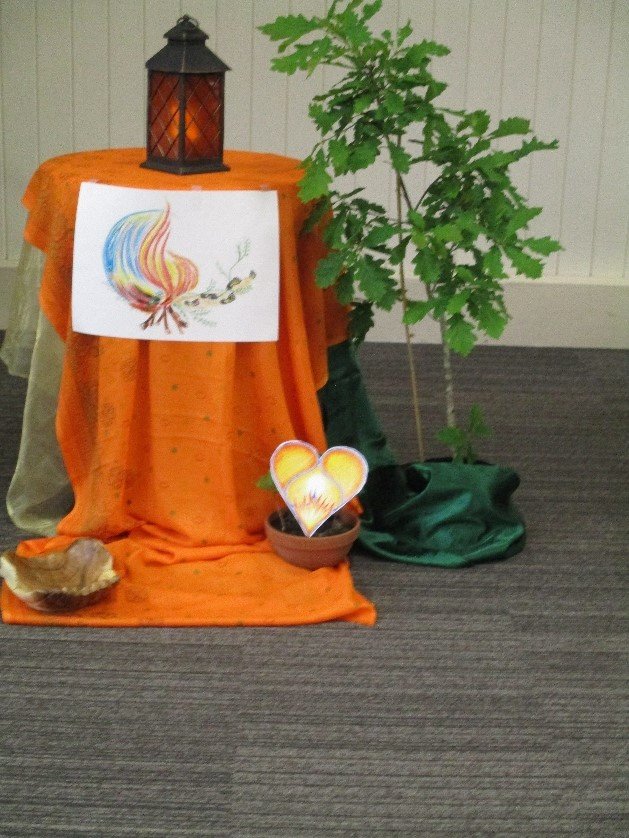
Recalling the lantern of Foundress, Nano Nagle
As we gathered for our opening ritual, at our Assembly in June, we were invited to “Remember Our Call”. To listen again to the call to us in the seasons of Spring, Summer, Autumn and Winter and to get in touch with what was stirring in our hearts as we gathered together as Province for the first time since 2019. These stirrings we shared with those at the table we had gathered with. We then prayed as we looked forward to thinking about our life with Christ, our commitment to life, dedication to ministry and supporting each other. We called each other to enter into ourselves, our experiences, our dreams and questions so that together we shape our future walking our journey and reminding each other that God asks us to act justly, love tenderly and walk humbly with God.
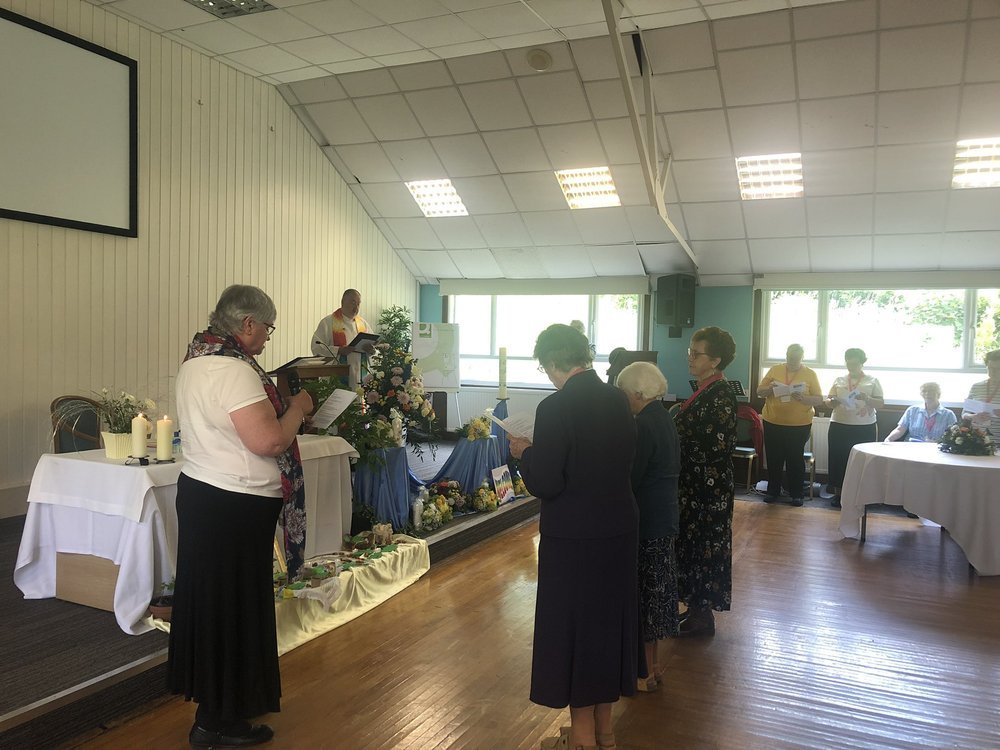
Jubilarians renewed their vows
Morning Prayer was led by different communities and gave us the opportunity to delve deeper and listen more acutely to what God is calling us to…
We celebrated Jubilarians, who renewed their vows at a joyful Mass celebrated by Fr Chris Thomas.
We took time to remember our sisters, family and friends who had died during the past 3 years – we had been unable to gather together to celebrate their lives. We were joined via zoom with those of our Sisters who were unable to be present with us.

Our prayer was one of blessing – for those who have gone before us marked with the sign of faith.
As part of our ritual, we were given large paper oak leaves and invited to write the names of anyone we wished to remember on the back. These were placed around the oak sapling and we picked up forget me not seeds for future planting.
We ended with lines from John O’Donoghue
They will never be forgotten
While there is one of us left to remember
And when there is no one left to remember
We will all be together.
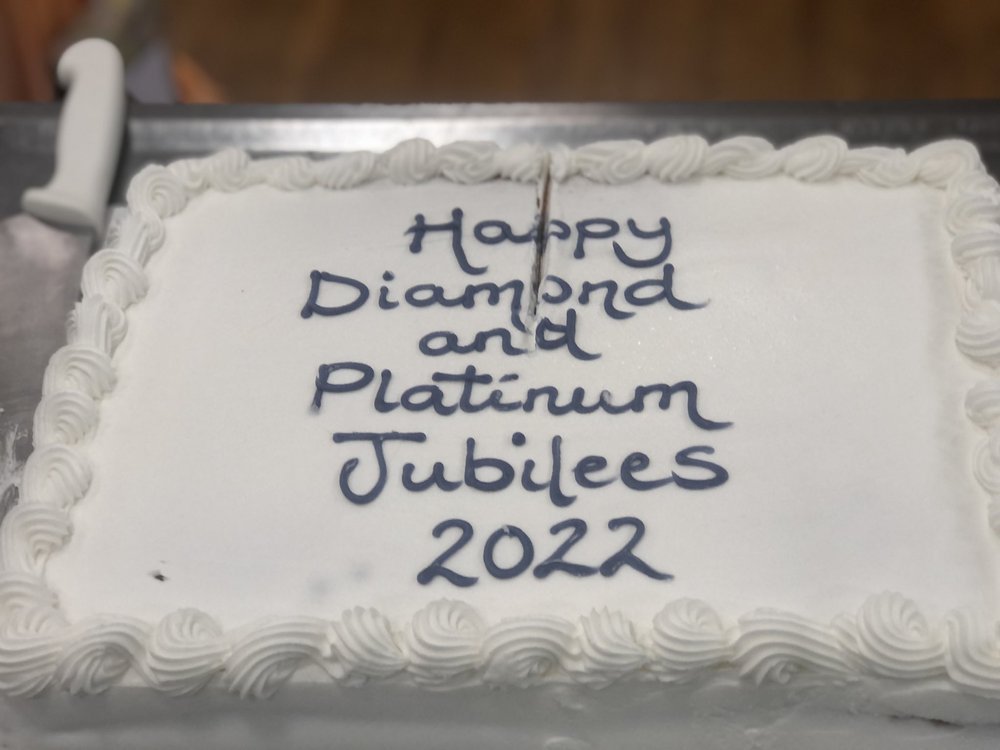
Recalling the skill of a Benedictine sculptor

An annual service of devotion to ‘Our Lady of Pew’ took place at Westminster Abbey in July. The Chapel of ‘Our Lady of Pew’ features a beautiful statue created by a Benedictine nun of Minster Abbey in Kent.

The late Sister Concordia Scott OSB
(Copyright:Dean and Chapter of Westminster)
Sister Concordia Scott OSB sculpted the fine alabaster statue of the Virgin and Child in the niche of the Chapel. It took 14 months to complete and was placed there in May 1971.
The original statue that was there disappeared centuries ago. The design of the 20th-century piece was inspired by a 15th-century English alabaster Madonna at Westminster Cathedral.
Sister Concordia Scott (1924 – 2014) was Prioress of the Minster Abbey community from 1984-1999.
Her commissioned works included statues for Westminster Abbey, Canterbury Cathedral, Coventry Cathedral and the National Shrine of Wales as well as numerous sculptures currently in Europe and the United States of America.
The Society of Our Lady of Pew venerates the Blessed Virgin Mary and regularly holds services and retreats in Westminster Abbey.
This small chapel hollowed out of the thickness of the wall between two chapels off the north ambulatory was originally a self-contained 14th-century rectangular recessed chapel, but it now forms part of the entrance to the Chapel of St John the Baptist. The term 'Pew' refers to a small enclosure or chapel.
Message from His Holiness Pope Francis for the World Day of Prayer for the Season of Creation, September 1st, 2022:
“If we learn how to listen, we can hear in the voice of creation a kind of dissonance. On the one hand, we can hear a sweet song in praise of our beloved Creator; on the other, an anguished plea, lamenting our mistreatment of this our common home.”

Dear brothers and sisters!
“Listen to the voice of creation” is the theme and invitation of this year’s Season of Creation. The ecumenical phase begins on 1 September with the World Day of Prayer for the Care of Creation, and concludes on 4 October with the feast of Saint Francis. It is a special time for all Christians to pray and work together to care for our common home. Originally inspired by the Ecumenical Patriarchate of Constantinople, this Season is an opportunity to cultivate our “ecological conversion”, a conversion encouraged by Saing John Paul 11 as a response to the “ecological catastrophe” predicted by Saint Paul v1 back in 1970. [1]
If we learn how to listen, we can hear in the voice of creation a kind of dissonance. On the one hand, we can hear a sweet song in praise of our beloved Creator; on the other, an anguished plea, lamenting our mistreatment of this our common home.
The sweet song of creation invites us to practise an “ecological spirituality” ( Laudato Si’, 216), attentive to God’s presence in the natural world. It is a summons to base our spirituality on the “loving awareness that we are not disconnected from the rest of creatures, but joined in a splendid universal communion” ( ibid., 220). For the followers of Christ in particular, this luminous experience reinforces our awareness that “all things came into being through him, and without him not one thing came into being” ( Jn 1:3). In this Season of Creation, we pray once more in the great cathedral of creation, and revel in the “grandiose cosmic choir” [2] made up of countless creatures, all singing the praises of God. Let us join Saint Francis of Assisi in singing: “Praise be to you, my Lord, for all your creatures” (cf. Canticle of Brother Sun). Let us join the psalmist in singing, “Let everything that breathes praise the Lord!” ( Ps 150:6).
Tragically, that sweet song is accompanied by a cry of anguish. Or even better: a chorus of cries of anguish. In the first place, it is our sister, mother earth, who cries out. Prey to our consumerist excesses, she weeps and implores us to put an end to our abuses and to her destruction. Then too, there are all those different creatures who cry out. At the mercy of a “tyrannical anthropocentrism” (Laudato Si’, 68), completely at odds with Christ’s centrality in the work of creation, countless species are dying out and their hymns of praise silenced. There are also the poorest among us who are crying out. Exposed to the climate crisis, the poor feel even more gravely the impact of the drought, flooding, hurricanes and heat waves that are becoming ever more intense and frequent. Likewise, our brothers and sisters of the native peoples are crying out. As a result of predatory economic interests, their ancestral lands are being invaded and devastated on all sides, “provoking a cry that rises up to heaven” (Querida Amazonia, 9). Finally, there is the plea of our children. Feeling menaced by shortsighted and selfish actions, today’s young people are crying out, anxiously asking us adults to do everything possible to prevent, or at least limit, the collapse of our planet’s ecosystems.
Listening to these anguished cries, we must repent and modify our lifestyles and destructive systems. From its very first pages, the Gospel calls us to “repent, because the kingdom of heaven has come near” (Mt 3:2); it summons us to a new relationship with God, and also entails a different relationship with others and with creation. The present state of decay of our common home merits the same attention as other global challenges such as grave health crises and wars. “Living our vocation to be protectors of God’s handiwork is essential to a life of virtue; it is not an optional or a secondary aspect of our Christian experience” (Laudato Si’, 217).
As persons of faith, we feel ourselves even more responsible for acting each day in accordance with the summons to conversion. Nor is that summons simply individual: “the ecological conversion needed to bring about lasting change is also a community conversion” (ibid., 219). In this regard, commitment and action, in a spirit of maximum cooperation, is likewise demanded of the community of nations, especially in the meetings of the United Nations devoted to the environmental question.
The COP27 conference on climate change, to be held in Egypt in November 2022 represents the next opportunity for all to join in promoting the effective implementation of the Paris Agreement. For this reason too, I recently authorized the Holy See, in the name of and on behalf of the Vatican City State, to accede to the UN Framework Convention on Climate Change and the Paris Agreement, in the hope that the humanity of the 21st century “will be remembered for having generously shouldered its grave responsibilities” ( ibid., 65). The effort to achieve the Paris goal of limiting temperature increase to 1.5°C is quite demanding; it calls for responsible cooperation between all nations in presenting climate plans or more ambitious nationally determined contributions in order to reduce to zero, as quickly as possible, net greenhouse gas emissions. This means “converting” models of consumption and production, as well as lifestyles, in a way more respectful of creation and the integral human development of all peoples, present and future, a development grounded in responsibility, prudence/precaution, solidarity, concern for the poor and for future generations. Underlying all this, there is need for a covenant between human beings and the environment, which, for us believers, is a mirror reflecting “the creative love of God, from whom we come and towards whom we are journeying”. [3] The transition brought about by this conversion cannot neglect the demands of justice, especially for those workers who are most affected by the impact of climate change.
For its part, the COP15 summit on biodiversity, to be held in Canada in December, will offer to the goodwill of governments a significant opportunity to adopt a new multilateral agreement to halt the destruction of ecosystems and the extinction of species. According to the ancient wisdom of the Jubilee, we need to “remember, return, rest and restore”. [4] In order to halt the further collapse of biodiversity, our God-given “network of life”, let us pray and urge nations to reach agreement on four key principles: 1. to construct a clear ethical basis for the changes needed to save biodiversity; 2. to combat the loss of biodiversity, to support conservation and cooperation, and to satisfy people’s needs in a sustainable way; 3. to promote global solidarity in light of the fact that biodiversity is a global common good demanding a shared commitment; and 4. to give priority to people in situations of vulnerability, including those most affected by the loss of biodiversity, such as indigenous peoples, the elderly and the young.
Let me repeat: “In the name of God, I ask the great extractive industries – mining, oil, forestry, real estate, agribusiness – to stop destroying forests, wetlands, and mountains, to stop polluting rivers and seas, to stop poisoning food and people”. [5]
How can we fail to acknowledge the existence of an “ecological debt” (Laudato Si’, 51) incurred by the economically richer countries, who have polluted most in the last two centuries; this demands that they take more ambitious steps at COP27 and at COP15. In addition to determined action within their borders, this means keeping their promises of financial and technical support for the economically poorer nations, which are already experiencing most of the burden of the climate crisis. It would also be fitting to give urgent consideration to further financial support for the conservation of biodiversity. Even the economically less wealthy countries have significant albeit “diversified” responsibilities (cf. ibid., 52) in this regard; delay on the part of others can never justify our own failure to act. It is necessary for all of us to act decisively. For we are reaching “a breaking point” (cf. ibid., 61).
During this Season of Creation, let us pray that COP27 and COP15 can serve to unite the human family (cf. ibid., 13) in effectively confronting the double crisis of climate change and the reduction of biodiversity. Mindful of the exhortation of Saint Paul to rejoice with those who rejoice and to weep with those who weep (cf. Rom 12:15), let us weep with the anguished plea of creation. Let us hear that plea and respond to it with deeds, so that we and future generations can continue to rejoice in creation’s sweet song of life and hope.
____________________________________________________________
[1] Address to F.A.O., 16 November 1970.
[2] SAINT JOHN PAUL II, General Audience, 10 July 2002.
[3] Address to the Meeting “Faith and Science towards COP26”, 4 October 2021,
[4] Message for the World Day of Prayer for the Care of Creation, 1 September 2020.
[5] Video Message to Popular Movements, 16 October 2021.
Key new role for FCJ Sister in Liverpool Archdiocese
“The Synod called for the voice of women to be heard and acknowledged – this appointment shows the commitment to what was asked.”

The Archdiocese of Liverpool has appointed Sr Lynne Baron, FCJ as Archbishop Malcolm McMahon’s delegate for Catholic social action.
Sr Lynne will be a key member of the new Archbishop’s Advisory Body and will ensure that the voice of a woman will be heard as the archbishop makes important decisions.
The appointment comes almost 12 months after the archdiocese met for the Synod 2020 (20 June 2021). Since then, the pastoral plan has been written, promulgated and implementation is ongoing.
A key call from the Synod was to renew our Church by reaching out, by being welcoming and inclusive.
The Pastoral Plan called for a new role to “place at the forefront of life of the Church inclusivity, justice and peace, the poor, marginalised and the environment, recognising that concern for the environment is a core dimension of our evangelising mission in the world.”

Archbishop Malcolm McMahon OP, said: “I truly believe that Sr Lynne is the best person to help develop this important area of our life as a Church and to guide us as we implement the direction set by the Synod.
“The Synod clearly called us to reach out to those who feel on the edges of both Church and society and it is clear to me that only if we look outward will we renew ourselves.”
Sr Lynne said of the role: “I am delighted to be able to take up this appointment as Archbishop’s Delegate and to contribute to the mission of the Archdiocese in this new way as the Church seeks to include the voice of women in its decision-making bodies. My area of responsibility, Catholic social action, is far reaching in these challenging times, but the archdiocese and its people have a strong history of social action, welcome and inclusion. I am excited to further enable this work to flourish, to ensure it is rooted in Catholic social teaching, and that it remains a significant aspect of the archdiocesan agenda.”
Sr Lynne’s appointment is the first step in changing the governance structures of the Archdiocese. The Synod called for the voice of women to be heard and acknowledged – this appointment shows the commitment to what was asked.
The Archbishop’s Council and College of Consultors has been revised. The Chapter of Canons will, from 6 June 2022, take on the role as College of Consultors and the Archbishop’s Council, from the same date, will become the Archbishop’s Advisory Body and so enable it to be made up of people who are not ordained.
A life lived to the full: Sr Pat Robb CJ
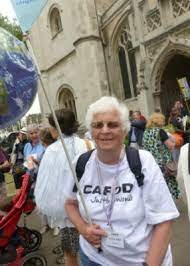
The following was taken from Sr Pat's personal memoirs by Sr Gemma Simmonds:
Pat was born in 1936 in Penang of a Scottish father and an English mother both of whom had served in World War I. Her father died in Malaya when Pat was only two, leaving her mother to move to a family farm in Somerset, where little Pat was soon in her element, riding horses and tractors and learning to love all things green and growing.
Her mother was called up for nursing service in WWII, so Pat was sent off to boarding school aged six. The end of war brought a further move to Cambridge, where an angry, sulking, rebellious young teenager (Pat's own description) was taken on in Paston House (now St Mary's School) by the then headmistress, Sr Christopher Angell, who is still alive and on mission in Zimbabwe aged 106. Sr Christopher saw Pat as a challenge, and she was not the only person to share this view of Pat in her lifetime! Paston House was Pat's eighth school, but she knew at once that a Mary Ward school was different from the 'survival of the fittest' culture she had met elsewhere.
Renouncing her original ambition to become a stable girl to the racing trainer in Royston, she followed her mother and chose nursing at the Middlesex Hospital in London. Pat loved nursing and the independent life of London with its smoke-filled coffee bars, skiffle music and mixed hockey played with young doctors. There were tensions around her interest in Catholicism both with her staunch Anglican mother and with a young farmer boyfriend who asked her to choose between him or becoming a Catholic. But neither mother nor boyfriend persuaded her, and Pat was received into the Catholic Church, making her First Holy Communion in the Cambridge Convent Chapel with Mrs Hawke, mother of Sr Anna and Nonie Hawke, who taught Maths at St Mary's, as her godmother.
Pat became a staff nurse, but further adventures called, and she sold her Lambretta scooter and boarded a ship bound for Australia, where she found a job in the mountains of New South Wales, covering everything from children's ward, A & E, maternity and the operating theatre, treating horrific accidents among men digging roads and dams out of the side of the mountains. She went on to South Africa in 1960, at a time of appalling violence and racial segregation, often finding herself sitting with the black Africans in church being glared at by white people.
Deciding to do a midwifery training in order to work in a bush mission hospital, she boarded a ship home, where she was pestered by two Irish nuns to visit their convent to see 'what it's like to be a nun'. Pat shuddered at the thought and avoided them for the rest of the journey, but to get them off her back, and thinking that a teaching order was a greater sacrifice, she said she was entering the sisters from her old school. True to her upbringing, she then felt she had to keep her word. Mrs Robb was distraught when she broke the news, but the Cambridge community were so good to her that in later years she was to say that she hadn't lost a daughter but had gained several. As anyone who knew her would understand, Pat found novitiate life very constricting, so she was delighted when she was sent to St Mary's School in Shaftesbury after her vows, heading for the open country and the wildlife with alacrity. As Sr Camillus she spent 18 years there as school nurse, starting the Duke of Edinburgh's Award Scheme, running the Scottish reels club with the help of its star dancer, now the abbess of a Benedictine monastery, and being chiefly remembered by the alumnae who have paid tribute to her on Facebook for riding their horses round the hockey pitch, roaring round in a tractor and teaching them to play rugger touch, despite the disapproval of many parents.
But her missionary vocation never left her, and she returned to midwifery in London, finally landing in Zimbabwe, in a hospital with over 200 beds, serving an enormous outlying rural area. Reverting to her baptismal name, Pat moved on to the municipal clinic in the desperate poverty of Amaveni township where her interests in justice and peace were roused by the torture and bullying she witnessed by Robert Mugabe's supporters. A call came from Mozambique, to Chimoio, on the border with Zimbabwe. Built for 25,000 people, Chimoio now held 250,000, mostly refugees from the civil war, squatting on the edge of the town without sewerage or shelter. She concentrated on Mother/Child health but was also dealing with high numbers of mutilated victims of violence and people dying of HIV/AIDS. In one of many stand-offs with authority in her life, she was deported from Mozambique after denouncing corruption within the local charity and government sectors but was asked to go to Angola with the charity CONCERN.
She flew there to find that the CONCERN office had been bombed during the night and all documents had been destroyed. Nothing daunted, she set up some feeding centres with Médecins sans Frontières. 100 people a week were dying of starvation and related diseases there under terrible living conditions and she was very busy, with shelling all night and drunk and drugged soldiers manning the many roadblocks as she and her companions drove through the mine fields. Asked if she would do similar work in the camps surrounding Rwanda, she became the camp administrator in Tanzania in 1993, moving on to Goma in the Congo and on into Rwanda and then Burundi to a camp which they had to evacuate five times in the six months she was there. Years later she and I went to see the film Hotel Rwanda. She was very silent on the way home, later weeping as she spoke of the horrors she had witnessed during the genocide.
Pat moved to yet another war zone in Sierra Leone, organising logistics to turn a disused university into homes for hundreds of people, helped by a Muslim cook called Alfred and a Christian guard called Mohammed. Her career in African war zones ended with brutal suddenness when a bout of cerebral malaria necessitated her repatriation to England. Here she found a volunteering role in the Cardinal Hume Homeless Centre, with one day a week in a legal aid firm involved with Human Rights for the Traveller community. It was the beginning of her life as a tireless campaigner for justice and peace that is acknowledged in Professor Anna Rowlands' recent book on Catholic Social Teaching which carries a dedication to Pat. It says: 'She represented the persistent widow, the virtuous and difficult woman who faithfully believes in a truth beyond mere power and witnesses to it until justice is rendered. She stands for a generation of women, written out of the magisterial pages of the tradition, but who have led and inspired social renewal.'
Conventional community life was not for Pat after her long years under fire and in May 1999 she moved to a flat in Cambridge, working first at Whitemoor High Security Prison and then in chaplaincy at the Oakington Immigration Detention Centre until its closure in 2010. Well into advanced old age she involved herself with Justice and Peace work through CAFOD and other NGOs, campaigning on behalf of refugees, several of whom became part of her extended family, as well as keeping up the care of her beloved allotment.
At the end of her memoirs Pat writes, "God has been VERY good to me". She, in her turn, fought the good fight on behalf of so many in need of a doughty champion. We can imagine her welcome in Heaven, "Well done, good and faithful servant - there are horses, motorbikes and gardens galore, just waiting for you to enjoy them…" May she rest in peace at last after her extraordinary life and rise in glory.
Tributes paid to Bruce Kent
He was a great orator and his words at Pax Christi AGMs, Justice and Peace events, protests at places from Trafalgar Square to Faslane and literally thousands of events over the years will continue to inspire the millions who heard him speak live.

By Ellen Teague:
I wonder how many people hearing Bruce Kent speak about peace activism in a Tablet webinar on 12 May and then seeing him attend the annual Conscientious Objectors service in Tavistock Square on 15 May marvelled at his continuing inspirational commitment to peacemaking in his 93rd year. Of course, he was partly able to manage it with his wife of 34 years - companion peace campaigner, Valerie Flessati - alongside him. But by the end of May Bruce was struck down by illness and died on 8 June. The strongest Catholic voice for peace and nonviolence in the UK was silenced. Or was it?
He was a great orator and his words at Pax Christi AGMs, Justice and Peace events, protests at places from Trafalgar Square to Faslane and literally thousands of events over the years will continue to inspire the millions who heard him speak live. Indeed, many talks and interviews can be accessed on the internet. He reached one million people at just one event - the Hyde Park march and rally in London against the Iraq War on 15 February 2003. "Wave your banners" he said, "what a beautiful sight you are" and engaged the crowd probably better than anyone else that day.
But speaking out was never linked to the size of an event. In early March he felt compelled to join a small CND delegation delivering a letter to the Russian Embassy in London, which said: "For the sake of Ukrainian children taking shelter from Russian missiles; for the sake of all those who will die if the situation escalates and for the sake of the millions of us who will perish if the heightened risk of nuclear war turns into a nuclear conflict, we urge your government to halt the attacks, withdraw the troops and withdraw the nuclear threats."
He lent support to many campaigns. Earlier this year when Campaign against the Arms Trade highlighted the seventh anniversary of the Saudi-led coalition's entry into the war in Yemen, where the Coalition's bombing campaign caused around 9,000 civilian deaths with many more injured, he said, "I am so glad that you have drawn attention to the barbarism of the war in Yemen in which Britain, as an arms supplier, is very responsible." His last blog for the National Justice and Peace Network called for Catholics to support the Peace agenda of Pope Francis - eight years younger than himself. And in it he deplored that at COP26, the recent UN meeting on Climate Change held in Glasgow, the massive contribution to CO2 output by the world's military hardly got a mention despite all the efforts of peace activists outside the official meeting.
The most prominent Catholic peace activist in Britain for more than half a century, Bruce Kent has served in management of the Campaign for Nuclear Disarmament (CND), the International Peace Bureau, the Movement for the Abolition of War, as well as Pax Christi, the Catholic Movement for Peace. He has been vice president of both CND and Pax Christi UK.
But where did his focus on peace come from? Much is told in his autobiography 'Undiscovered Ends' which was produced in 1992 with only two-thirds of his life lived!
His compassion for people facing hardship or trouble, and victims of conflict, goes back to his youth. During schooldays at the Jesuit's Stonyhurst College "where I became an orthodox, right wing young Catholic" he remembers making a fuss about the situation of a cleaner who had a two mile walk to work and he thought transport should be provided. All his life he was quietly attentive to people on the margins. After a period of national service in the British Army, where he served in Northern Ireland, and reading law at Oxford University, he entered a seminary to train as a Catholic priest. The seminary encouraged outreach and he paid weekly visits to a TB sanatorium. He reflected that, "being a Catholic was more than reciting prayers and saying Mass."
In 1969 he was in Biafra during the Nigerian Civil War and saw the victims of the embargo imposed there. He used to point out that one and a half million people starved to death and the blockade was made possible by British weapons. "Biafra taught me the importance of fighting injustice's causes - not just its symptoms" he said, and he has felt the same about the many wars since that time. To ignore the causes of injustice and war "is to short-change the poor of this world". He felt that war and militarism could not be treated as separate issues by any aid agency dealing seriously with poverty.
Bruce was first introduced to the Catholic peace movement in the 1960s. He had met and greatly admired US Archbishop Thomas Roberts SJ at that time, who played a significant role in promoting recognition of conscientious objection to war, using the example of Franz Jägerstätter, an Austrian Catholic who was beheaded in 1943 for his refusal to serve in Hitler's army. People like Jägerstätter, Roberts argued, should know they have the clear support of Church teaching. He also took the view that nuclear weapons involve immoral actions: the destruction of innocent people and a willingness to perform such acts in given circumstances. Bruce had witnessed 'Ban the Bomb' demonstrations in London and developed an affinity with peace campaigners and conscientious objectors. It was a decade that saw him working for Cardinal John Heenan in Archbishop's House, being made a 'monsignor', and clearly being earmarked as a rising star in the Church. He heard remarks about damaging his career if he remained active with CND, but peacemaking had become his primary vocation.
In the 1970s Bruce was juggling chaplaincy work, parish work and peace commitments, including working in the CND office. He was inspired by the great encyclical Peace on Earth in 1963 and in 1971 by the "remarkable" document on the Church and Justice produced by the Bishops' Synod in Rome. Called Our World and You it focused on poverty, peace, education for justice and the Church's duty to practice what it preaches. In 1980 he became the General Secretary of the Campaign for Nuclear Disarmament, at a time when Britain announced it would be hosting American cruise missiles and build new Trident nuclear submarines with American missiles and British warheads. Membership of CND mushroomed throughout the 1980s. Bruce spoke at huge rallies, wrote articles, did interviews, debates, and visited local groups. He often returned on a late-night train from meetings round the country and rose to say early Mass in his parish before heading to the office for another hectic day. There was also a growth in heated attacks on himself and on CND. On 6 August 1986, for example, as he completed a long walk from the nuclear submarine base at Faslane in Scotland to Burghfield, the nuclear bomb factory in Berkshire, the minutes' silence for the dead of Hiroshima and all wars was drowned out by the loud music of opponents.
His greatest sadness was that the Catholic Church "kept the peace movement at arm's length," although a CND survey in the early 1980s found that 25 percent of members were also Christians active in their churches. However, there were exceptions - the late Bishop Victor Guazzelli, former President of Pax Christi, and Bishop Thomas McMahon of Brentwood who broke ranks to call for Britain to take first steps to de-escalate nuclear build up. Bruce praised Cardinal Basil Hume "who gave me generous support" despite mounting personal criticism of Bruce's role in CND by prominent Catholics. These were years when nuclear disarmament was a hot political issue, constantly in the news. For Bruce, things came to a head with the prospect of a 1987 general election promising another bitter contest over the nuclear issue, and further personal attacks on his leadership role in CND.
He felt he was in an impossible position. "Many of my fellow Catholics, and other Christians, told me that what I was doing as a priest gave them hope", he says, "though I knew that most of my bishops did not think my work was priestly". In February 1987 he took the decision to retire from active ministry, saying "I no longer find it possible to cope with the strain resulting from the tension between my pastoral role which means so much to me and what is thought to be an unacceptable political role". In the 30 years since that time Bruce has continued his peace activism. Since 1988, his wife and peace activist Valerie Flessati has been by his side.
Bruce felt an affinity with all peacemakers and all would testify to his generosity and kindness in affirming others. At the 60th anniversary of Christian CND last year, Bruce and Valerie gave highlights of CCND campaigning. One participant said, "I will never forget Bruce turning up at Greenham Common - the site of cruise missiles - to bring chocolates and some warming Scottish 'water of life' during the biblical 40 days of rain after the caravans were evicted in September 1982, and many times after that!" He loved social gatherings and at his birthday parties he would have an array of party games ready for young nieces and nephews and others. My own family received cards from him regularly, whether praising articles or encouraging artistic endeavours. He gave time to sitting for son Luke and the resulting painting is today in the Bradford Peace Museum.
Bruce had endless positive energy, creativity and insight into important issues. The National Justice and Peace Network has called him a "modern prophet" and praised him for understanding "that all justice issues are connected, although his own focus was on ending war and building a culture of peace". He was behind the DVD, Conflict and Climate Change, produced in 2009 which made links between militarism and human-induced global warming. In his speech at Coventry University last November, where he was awarded an Honorary Doctorate, he urged the student audience: "Please think for yourselves. Don't be swept along by whatever happens to be the propaganda of the day. Ask your own critical questions. For example, why are people risking their lives trying to cross the Channel in small boats?" It was interesting when Pax Christi friends had occasional outings to the cinema to view some worthy film, that Bruce would loudly lament the adverts for violent films which preceeded it and which he felt should not masquerade as entertainment. He had an allergy to violence of any kind.
Bruce was an outspoken opponent of the British Government planning to spend more than £200 million on building and maintaining another generation of nuclear weapons to replace Britain's current Trident system. He felt it makes nonsense of any British commitment to rid ourselves and the world of nuclear weapons. "If you have these weapons, you intend to use them" he would say, "and that is immoral". He urged support of the UN Treaty on the Prohibition of Nuclear Weapons.
Bruce educated young people about citizenship and the work of the United Nations. "I go into schools of all sorts" he said, "and ignorance of the good work of United Nations and of its sub agencies, of the International Court of Justice, or the International Criminal Court is massive". It grieved him that, "the miracle which brought the UN to life in on 26 June 1945 remains so small a priority in the Church, and in public life generally".
Bruce admired Pope Francis and supported his work on any action related to peace, justice, equality and the global trusteeship of our world. Bruce felt that peace on Earth is going to depend on joined up education and campaigning on overcoming poverty, militarism and climate chaos, and that Pope Francis understands these connections. "I believe in nonviolent solutions to problems" he said and was delighted that Pope Francis chose to focus on 'nonviolence as a political choice' for his World Peace Day message for 1 January 2017. He was full of admiration for people like Pat Gaffney, former general secretary of Pax Christi, who work quietly and constantly for the common good.
In fact, he was always anxious to recognise women. He applauded his own mother for the strong influence of her Catholic faith in his early years growing up in Hampstead, London, and also being "very generous and outgoing", and Valerie for her peace publications and wisdom on strategising for peacework. Bruce and Valerie knew Franzisza, the widow of Franz Jägerstätter, personally and admired her support of her husband's stance despite being left to raise their three children on her own, harassment from the local community and widowhood of seven decades. He commended Jo Siedlecka of Independent Catholic News for her interest in publishing peace events and stories, and women religious for their loyal support of Pax Christi.
Bruce engaged with groups outside church circles, wherever he found kindred spirits. In 1988 he walked 1000 miles from Warsaw to Brussels (NATO) calling for a united peaceful nuclear-free Europe. In 1999 he was British co-ordinator for the Hague Appeal for Peace, a 10,000-strong international conference in The Hague, which initiated some major campaigns (e.g. against small arms, the use of child soldiers, and to promote peace education). It was this, along with his friend, Professor Joseph Rotblat's Nobel acceptance speech calling for an end to war itself, that inspired Bruce to establish in the UK the Movement for the Abolition of War. In 2019 the International Peace Bureau awarded Bruce the Sean MacBride Prize in recognition of his life's work for peace and disarmament. Bruce also engaged with refugees, visited prisoners and campaigned for prison reform. He was a patron of the Palestine Solidarity Campaign.
Bruce said once: "I have always been a glass half full not half empty person and in terms of peace and social justice the Catholic glass is very much half full". He felt it was amongst groups of visionary people such as Justice and Peace groups and Pax Christi, "that I find my own sources of life and inspiration". He was, "a comfortable member of my own parish but it is with its Justice and Peace Group that I am really at home and of one mind."
I was always surprised that Bruce was sometimes seen as a contentious figure by some Catholics. He spoke such good sense with eloquence and vast background knowledge, always ready to listen to others and to engage with differing opinions. In private, the hospitality of Bruce and Valerie was legendary, surrounded in their flat by books, posters and memorabilia testifying to their faithfulness to their vocation as Catholic peacemakers. They were strongly ecumenical too. Just over a year ago, Bruce and Valerie were jointly awarded the Archbishop of Canterbury's Lambeth Cross for Ecumenism, "for exceptional, tireless and lifelong dedication to the Christian ecumenical search for peace, both individually and together." He was widely admired. At the London service for conscientious objectors in Central London five years ago, there was great excitement that Sir Mark Rylance was speaking, but the award-winning actor himself said his highlight of the day was meeting his "hero", Bruce Kent.
The media was buzzing with tributes as soon as his death was announced. From around the UK and internationally Bruce was described as "a true man of peace", "one of the greatest peace campaigners the world has ever known" and "a great human being and a prophet". I found particularly moving, "our society is weakened by his passing".
Bruce's favourite quote from Catholic Social Teaching was from Pope Paul VI's 1967 encyclical Populorum Progressio: 'Peace is the fruit of anxious daily care to see that each person lives in justice as God intends'. He gave faithful "anxious daily care" to his mission for peace for as long his health permitted and he will long continue to inspire.
Second webinar on dementia : June 9th

Following a very well attended webinar on dementia earlier in the year, organised by the Health & Care group, a second zoom session with expert speakers has been organised for June 9th, 1.30pm to 3pm.
Speakers:
Sharon Johnston:
Specialist Admiral Nurse
Barnet, Enfield and Haringey Mental Health Trust
Sarah Hodges:
Specialist Dementia Occupational Therapist
Barnet, Enfield and Haringey Mental Health Trust
Lis Burgess Jones:
Previously Director of Nursing at Camden & NW London Mental Health Trust
Now Chair of North London Hospice - https://northlondonhospice.org/about-us/meet-the-team/
To get the zoom link, email: communications@corew.org

Together along the digital highway
The conference was organised by a group of Religious who have been meeting monthly on Zoom for the last two years. These meetings have given opportunities to share good practice and resources in our online work, and have also become a source of friendship and support.

By Sr Jessica OSB of Mucknell Abbey
A group of Religious sisters and brothers, all involved in social media in different ways, met together for a day conference in early May, to share insights and discuss in depth how we, as Religious, share ourselves, our lives and our faith online. All together, there were 20 attendees, 12 in person at the Sisters of Mercy Convent in Bermondsey and a further 8 online. There were 13 different congregations and communities represented, both apostolic and monastic, Roman Catholic and Anglican.

The conference was organised by a group of Religious who have been meeting monthly on Zoom for the last two years. These meetings have given opportunities to share good practice and resources in our online work, and have also become a source of friendship and support. They originally started because of a cancelled ‘in person’ conference at the start of the pandemic; meeting together in this hybrid format gave a sense of coming full circle.
In the morning, we had some time for introductions and then Sr. Jessica spoke about her journey with using twitter, both as a primary school teacher and latterly as a Religious. She talked about the reflection she had undertaken on what constituted a monastic and Benedictine use of twitter, and then shared some of the questions she was now asking herself about the ongoing purpose of her use of twitter.
After lunch, we reconvened to hear from Sr. Judith and Sr. Silvana, both of whom reflected on how the particular charism of their communities (Turvey Abbey and Society of the Sacred Heart respectively), informed their writing and sharing online. Sr. Judith spoke about her ongoing use of Facebook, and how she looked for inspiration in the daily liturgy when writing her posts. She shared her aim to encourage love, kindness, prayer and peace in her posts and in her responses, drawing on the Vita et Pax foundation made by Dom. Constantine.
Sr. Silvana then shared her journey with blogging, again reflecting on the way in which her engagement online flows out of her life as a religious sister. She quoted from her first blog post, saying, “This [being a religious sister] is who, what and how I am, and what I want to share with others. So in this blog I hope to bring together my different loves - of words, photography, creativity - and place them at the service of my central love, the Love that will not let me go.”.
The day was full of rich conversation, reflective and at times challenging discussion, and plenty of laughter. At its conclusion, we affirmed the support we continue to provide to one another, and were unanimous in our desire to meet again next year
If anyone is involved in digital communication for their congregation and would be interested in joining the group please email Cathy Edge RSM: cathy.edge@iolmercy.org.uk
Well known retreat giver, Fr Tom Shufflebotham SJ, has died

Fr Tom Shufflebotham SJ passed away on May 4th. He was 87.
Tom was born on 14th July 1934 in Newton-le-Willows in Merseyside and was educated at St Francis Xavier College in Liverpool and then at Mount St Mary’s. He joined the novitiate at Harlaxton in 1952 at the age of 18, and after taking First Vows and making a two-year juniorate in Roehampton, studied for a licentiate in philosophy in Heythrop, Oxfordshire. Between 1958 and 1961 he read for a Master’s degree in modern history at Campion Hall in Oxford, followed by a three-year regency at St George’s College in Salisbury, Rhodesia, teaching history and Latin. A licentiate in theology at Heythrop followed, during which he was ordained in 1967. After a fourth year of theology post-ordination he made his tertianship at St Beuno’s under Paul Kennedy. Between 1969 and 1980 Tom taught history, first at St Ignatius College, Enfield and then, from 1973, at Stonyhurst.
In 1980 he moved to Loyola Hall as a member of the retreat house team and Superior of the community. In 1985 he was appointed as Rector of the Jesuit community in Wimbledon, combining this with the job of vocations’ promoter the following year. After a brief sabbatical, he joined the team at St Beuno’s in 1993, staying there for the next two decades and becoming Superior in 2003. His final move was to St Wilfrid’s Preston in 2014, where he continued to direct the Spiritual Exercises until his final illness.
His Requiem Mass will take place on Wednesday 1st June at 12.15pm at St Wilfrid’s church in Preston.
An invitation from Cardinal Michael Fitzgerald M.Afr
Today, Eastern Christians are a diminishing presence in the Middle East. Maintaining their presence in those lands is essential for stability in the wider region, as well as for guaranteeing Western Christians an unbroken heritage and tradition from the source of our faith.

Dear Brothers and Sisters in Christ,
In my capacity as Patron of the Catholic charity, Fellowship and Aid to the Christians of the East (FACE), I am very happy to commend to you the International Day of Prayer for Eastern Christians, which takes place each year on the Sixth Sunday of Easter (22nd May, 2022).

The Day of Prayer for Eastern Christians was launched by l’Oeuvre d’Orient, a French charitable body which has been actively supporting Eastern Christians for over 160 years. From its inception, in 2016, the Day of Prayer has been supported by the Congregation for Oriental Churches. Over the past three years, thanks to the initiative and organisation of the British charity, Fellowship and Aid to the Christians of the East (FACE), the Day of Prayer has been observed by dioceses across England, Wales and Scotland.
This Day of Prayer brings Eastern and Western Christians together and offers an opportunity to give thanks to God for all that we owe the Oriental Churches: the first preaching of the Gospel, the origins of the monastic tradition, many of the early Church Fathers, and, above all, the witness of the Eastern Christians down the centuries which has been, and still is, an inspiration to our faith.
Today, Eastern Christians are a diminishing presence in the Middle East. Maintaining their presence in those lands is essential for stability in the wider region, as well as for guaranteeing Western Christians an unbroken heritage and tradition from the source of our faith. Our Catholic charity, Fellowship and Aid to the Christians of the East (FACE), devotes itself exclusively to supporting the Eastern Catholic Churches in the Middle East, the Horn of Africa and India, through long-term projects in education, healthcare, pastoral support and interreligious dialogue, so that Eastern Christians may remain in their homelands.
As we come to rejoice with renewed faith in the power of the Risen Lord during this season of Easter, please pray for Eastern Christians, many of whom are suffering from the effects of war and discrimination, especially those in Ukraine who are dispossessed and displaced. May the joy and blessings of Easter fill their hearts – and ours – with hope, so that together we may all come to rejoice with renewed faith in the power of the Risen Lord.
Accordingly, I would plead that this Day of Prayer for Eastern Christians be observed in your parishes on the Sixth Sunday of Easter, and that an opportunity be given to the faithful not only to pray in union with these Christians but also to show their solidarity with them through an optional collection in aid of FACE’s projects under the patronage of the Eastern Catholic Churches.
With the assurance of my prayers and warmest wishes,
Yours in Christ,
Michael Cardinal Fitzgerald M.Afr.
Ears to Listen: Response of Religious to synodal consultation

By Sr Margaret Donovan HC
The three webinars on Communion, Participation and Mission were well attended (between 200-300 each time).
Each started with a time of prayer and a reflection, given by a speaker on the theme. Then there were break out groups to discuss the following:
a) The reflections and thoughts of Religious with respect to their experience of Communion/Participation/Mission in the life of the church in England and Wales.
b) Things Religious identify as the church needing to let go of in England and Wales to allow new or deeper experiences of Communion/Participation/Mission to come.
c) Things Religious identify as the church needing to develop or learn to do in England and Wales, to allow new or deeper experiences of Communion/Participation/Mission to come.
After the session there was an opportunity for Religious to submit further reflections on each of the questions. Overall there was an enormous response, for which we are very grateful. The feedback has been submitted to CICLSAL.
Thank you to everyone who took contributed in any way to the Religious Synodal process. We hope for a positive outcome.